

FOLLOW US ON... FEEDBACK

Home >> Industry News >> Current Affairs
eyeAdvise app - Frames Overview eyeAdvise app - Digital Mirror
Current Affairs
  • Also available via:


Advanced Medical Optics Recalls Contact Lens Solution PDF
Submit Your News
Current Affairs
Thursday, 23 November 2006
Advanced Medical Optics Inc. has recalled almost 3 million units of its Complete MoisturePlus contact lens solution due to sterility problems that could lead to eye infections, the second major recall of a contact lens solution this year.

The company has recalled 115,000 bottles of its contact lens solution in Southeast Asia due to contamination, following a similar action for 183,000 bottles in U.S. on Tuesday.

Due to a problem with the filtration system in its manufacturing plant in China, 2.9 million bottles of Advanced Medical Optics contact lens solution has been contaminated with the ralstonia bacteria, and are being recalled. Most of the recalled 2.9 million units were shipped to U.S., Japan and other parts of Asia, the company said.

"Firstly, I would like to apologise for the inconvenience we have caused some of our consumers. In about a week's time, we will give details on refund procedures in all countries that are affected," says Anthony Chung, VP of Asia Pacific, Advanced Medical Optics.

Doctors say the ralstonia bacteria does not cause any serious eye infections, but there are risks.

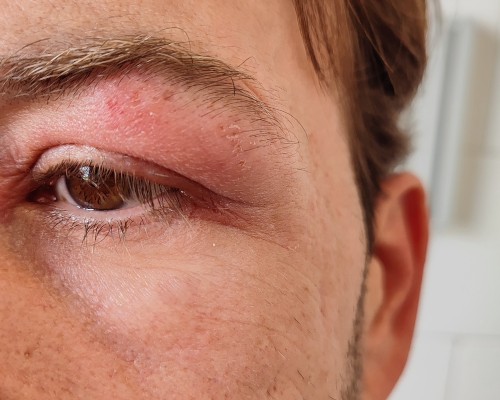
"If it's really contaminated with a bacteria that can cause eye infection, then users can potentially have an eye infection. The symptoms range from experiencing pain in the eye, redness in the eye, tearing and a drop in vision," says Dr Lee Sao Bing, consultant eye surgeon at The Eye Institute, National University Hospital, Singapore.

Advanced Medical Optics announcement comes just six months after rival company Bausch & Lomb recalled its ReNu MoistureLoc contact lens solution after it was linked with infections of the cornea.

Analysts have estimated that Bausch & Lomb faces up to US$1 billion in potential legal liabilities from the infection cases.
 
Requirements for Sale and Supply of Optical Appliances in UK PDF
Submit Your News
Current Affairs
Wednesday, 22 November 2006
The General Optical Council (GOC) of UK on 30 October met with representatives of the optical professional and representative bodies to explain how it will interpret the law on sale and supply of spectacles and contact lenses.

The meeting was held in response to concerns reported to the Council that some glasses and contact lenses were being sold outside the legal framework designed to protect the public. Sales of some types of spectacles and all contact lenses must be carried out with the involvement of a registered optometrist, dispensing optician or medical practitioner.

GOC Chairman Rosie Varley said: "The General Optical Council has a critical role to play in ensuring that the public have freedom of choice in buying spectacles and contact lenses, provided that the proper safeguards are in place. The regulations are designed to protect consumers from eye health problems by ensuring that qualified professionals are involved in prescribing and selling spectacles and contact lenses."

The Council stated the circumstances in which sales must be carried out under the 'supervision' of a registered practitioner and those which must be carried out under the 'general direction' of a registered practitioner. The statement includes a clarification of the requirements relating to sales of plano (zero powered) contact lenses. Plano lenses must be sold under the supervision of a registered optician or doctor, unlike sight correcting (powered) lenses which can be sold under the less stringent requirement for 'general direction'. However, customers buying corrective lenses must have a valid 'specification' provided by their optician following an eye test and a fitting for contact lenses.

The clarification has been issued following consideration of expert advice. The Council advises suppliers to take immediate steps to ensure that their procedures met the appropriate requirements.

The College of Optometrists and the Association of British Dispensing Opticians confirmed that they will review guidance to the professions to clarify any issues relating to what is expected of a professional supervising or directing sales of spectacles or contact lenses.

Following the issue of the Council's statement, and any resulting guidance produced in relation to supervision and general direction, suppliers and practitioners will be given an appropriate period of time to comply with requirements. Suppliers and practitioners will have to show they meet these requirements. Failure to comply may result in formal action being taken by the GOC or others. There will be no grace period for suppliers failing to verify specifications in accordance with the legislation.
 
FDA Approves Heidelberg's High-Speed Retinal Imaging Device PDF
Submit Your News
Current Affairs
Tuesday, 14 November 2006
Heidelberg Engineering GmbH, the German based developer of laser diagnostics for ophthalmic applications, announced the U.S. Food and Drug Administration (FDA) has granted clearance for the Spectralis HRA+OCT, a device that combines optical coherence tomography (OCT) with laser angiography.

The new product detects previously unrecognized structures of the retina, combining high resolution cross-sectional images of the retina with any of four imaging modalities: autofluorescence, infrared, fluorescein angiography, or ICG angiography. The new device scans the retina 100 times faster than older existing technology known as time domain OCT. Spectralis HRA+OCT is a spectral domain system, sometimes called fourier domain, which scans the retina at 40,000 scans per second, creating highly detailed images of the structure of the retina.

Because the OCT and HRA images are captured simultaneously, the clinician can be assured of the exact location of the area of interest and can correlate the outer visible retina structure with the internal structure.

"This new technology represents a dramatic leap in our ability to image complex macular disease," said Scott Cousins, MD, director, Duke Center for Macular Diseases, at Duke University, U.K. "The combination of these two cutting edge technologies will amplify our understanding of retinal structure and provide us with new insights into the biological processes of the retina."

The new product is built on the company's successful Heidelberg Retina Angiograph (HRA) platform, the first commercial angiography system to use lasers in combination with marker dyes such as sodium fluorescein and indocyanine green (ICG). Using the HRA instead of white light photography has allowed clinicians to capture detailed images of the blood vessel structure within the retina, a key diagnostic indicator for such common eye disease as age-related macular degeneration and diabetic maculopathy. Another advantage of using lasers is the fast frame rate which enables movies of the blood flow, adding a new diagnostic dimension over traditional photography.

Of recent interest is the HRA's capability to cause certain retinal components to fluoresce in a process known as autofluorescence. Geographic atrophy of age-related macular degeneration is being followed using autofluorescence as a potential early indicator of disease progression in the recently announced AREDS 2 clinical trial.

The new product will be presented at the upcoming American Academy of Ophthalmology meeting in November. The company expects to begin shipping the product in mid-2007.
 
FDA Issues Warning Letter to Bausch & Lomb PDF
Submit Your News
Current Affairs
Monday, 13 November 2006
A recent FDA warning letter was issued to Bausch & Lomb stating that the company failed to report 35 foreign cases of Fusarium keratitis infections that were later linked to its ReNu with MoistureLoc solution.

The letter states that Bausch & Lomb did not report the cases by April 7, 2006, as required by law, after Singapore health officials alerted the company. The FDA says that the reporting failure occurred after the company suspended sales of the lens solution in Singapore, and after the FDA began an investigation of the manufacturing plant where Bausch & Lomb made the solution.

ReNu with MoistureLoc solution has since been withdrawn from all markets. The company has acknowledged that ReNu with MoistureLoc was the potential "root cause" of increased risk for Fusarium keratitis; several cases were reported in parts of Asia and the United States.

In a statement, Bausch & Lomb says it has completed more than two-thirds of the corrective actions it pledged in response to the FDA¡¦s concerns, stemming from the March-to-May inspections of the manufacturing plant. The company says that it should be ready for a reinspection before March 31, 2007.

The FDA has stated that it found no problems at the plant with any other Bausch & Lomb products.
 
Winners of The 2006 Golden Silmo Awards PDF
Submit Your News
Current Affairs
Tuesday, 31 October 2006
The winners of the 2006 Golden Silmo awards, unveiled live from Paris!

They are as follows:

Lenses
  • RODENSTOCK for IMPRESSION MONO

  • Frames ¡V Technological Innovation
  • AXEBO for LECTRA

  • Children's/Teen Eyewear
  • INOTTICA for FPV 11 by FISHER-PRICE

  • Sports Eyewear
  • DEMETZ for BLING

  • Low Vision Equipment
  • VISIOLE for LEP 430

  • Sunglasses / Fashion Eyewear
  • LAFONT for SURPRISE

  • Ophthalmic Frames (style, design)
  • EXALTO for ISTERY

  • Contact Lenses
  • JOHNSON & JOHNSON VISION CARE for ACUVUE OASYS with HYDRACLEAR Plus

  • Equipment / Tools
  • INDO for OPERA SCAN

  • Equipment / Components / Industrial machinery and processes
  • COMOTEC for FLAT FLEX

  • Optical instruments
  • MEDAS for OPTIVIEW 10*50 by CELESTRON

  • Product environment and accessories
  • MOREL for KIT PLV by KOALI


  • The ceremony for these awards took place at Pavillon Gabriel, a location near the Champs Elyses and Place de la Concorde.
     
    Clinical Trials of Microcurrent Stimulation For AMD Treatment PDF
    Submit Your News
    Current Affairs
    Monday, 30 October 2006
    ScyFIX, a Minnesota, U.S.-based medical device venture specializing in alternative treatments for eye diseases, has announced upcoming clinical trials for a device that has shown efficacy in treating age-related macular degeneration (AMD) and glaucoma.

    The company's flagship device employs microcurrent stimulation (MCS) technology, in which precise, minute amounts of electrical current are applied to specific locations over the closed eyelid. The company says research has demonstrated that electrical stimulation activates the eye's endogenous neuroprotective system and it also shows that neurotrophins gradually increase in the retina after treatment, peaking by seven days after treatment. It is suggested that repeated stimulation may offer the possibility for a chronic neuroprotective treatment that is simpler, safer and less invasive than neurotrophic therapy alternatives involving intravitrial injection or gene therapy.

    The ScyFIX MCS device is said to be approved by regulators in Australia, Canada and Europe, and has been used to treat more than 1,000 patients outside of the United States. Field results reportedly indicate safety and efficacy with no observed side effects. It is claimed that the treatment has routinely halted the progression of retinal diseases and in many cases improved vision.

    Phase I trials are expected to begin by January 1, 2007; Phase II trials will begin if Phase I results are satisfactory and if sufficient funding is received.
     
    << Start < Prev 1 2 3 4 5 6 7 8 9 10 Next > End >>

    Page 9 of 10