


Lions Eye Institute and Curtin University Collaborate to Develop Breakthrough Treatment for Inherited Retinal Diseases
 Lions Eye Institute and Curtin University have announced an exciting collaboration that holds the promise of a groundbreaking treatment for inherited retinal diseases. Dr. Livia Carvalho, leading the Retinal Genomics and Therapy group at the Lions Eye Institute, and Associate Professor Hani Al-Salami from Curtin University have joined forces to pioneer a new approach to delivering vital medicines into the eye. This collaboration, supported by the National Foundation for Medical Research and Innovation and loyal supporters, aims to provide long-term sustained delivery of treatments and potentially prolong vision for patients suffering from inherited retinal diseases.
Inherited retinal diseases, such as retinitis pigmentosa, result in vision loss due to the death of rod and cone photoreceptor cells in the retina. Dr. Carvalho's team achieved a significant milestone by being the first in the world to test a drug called GSK-J4 that can prevent cone cell death, which contributes to central vision loss in different types of inherited blindness. Their research, published in 2022, demonstrated that continuous release of GSK-J4 could halt cone cell death effectively.
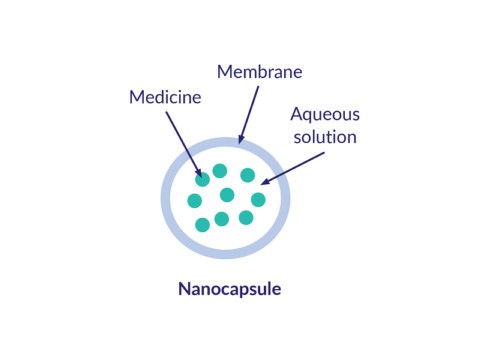
Despite this breakthrough, the current delivery method for GSK-J4 via injections every two weeks presents practical challenges and increased risk of complications, rendering it unviable for long-term treatment. This is where the collaboration with Associate Professor Al-Salami's team becomes crucial. Their pioneering work on nanocapsules has opened up new possibilities for sustained delivery of medications into the eye.
Dr. Carvalho expressed enthusiasm about the potential of the nanocapsule technology, stating, "The nanocapsule technology developed by Associate Professor Al-Salami's team is very exciting as it could offer a new way to provide long-term sustained delivery of treatments into the eye. By joining forces, we aim to develop a treatment we hope can prolong vision for patients suffering from inherited retinal diseases for as long as possible."
The successful development of this innovative treatment would be a significant advancement in the field. The next step for the collaborative team would involve initiating clinical trials to assess the treatment's efficacy and safety, bringing hope to individuals affected by inherited retinal diseases.
The Lions Eye Institute and Curtin University express their gratitude to the National Foundation for Medical Research and Innovation and loyal supporters for their continued support. Without their contributions, the progression of vital research projects, such as this collaboration, would be hindered.