


Researchers Pave the Way for Innovative Cell-Based Treatments with Microscale Eye Implant
 A team of researchers from the KTH Royal Institute of Technology and the Karolinska Institutet in Sweden has created a microscale device designed for implantation in the eye. This innovative device opens up new horizons for cell-based treatments of diseases, particularly diabetes. The 3D-printed implant is engineered to encapsulate insulin-producing pancreatic cells and electronic sensors, offering remarkable potential for advanced medical applications. The details of this revolutionary work have been published in the esteemed journal Advanced Materials.
The collaboration between KTH and Karolinska Institutet has resulted in a cutting-edge medical device that can precisely position micro-organs, such as pancreatic islets or islets of Langerhans, within the eye without the need for sutures. This breakthrough technology paves the way for cell-based therapies, particularly in treating Type 1 and Type 2 diabetes, using the eye as a unique platform.
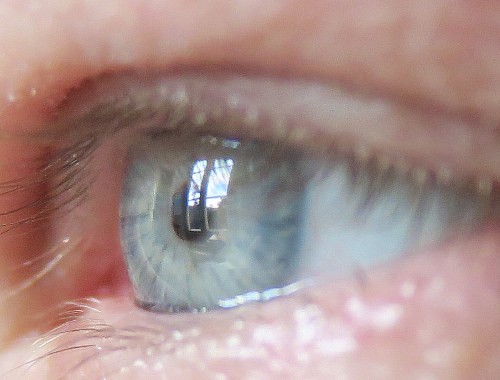
Anna Herland, a senior lecturer in the Division of Bionanotechnology at SciLifeLab at KTH and the AIMES research center at KTH and Karolinska Institutet, explained the significance of using the eye for this technology. She emphasized that the eye is an ideal choice due to its immunity to unfavorable immune responses during the initial stages of implantation. Additionally, its transparency allows for visual and microscopic examination of the implant's behavior over time, making the eye "our only window into the body."
The microscale device, shaped like a wedge and measuring around 240 micrometers in length, can be mechanically fixed at the angle between the iris and the cornea in the anterior chamber of the eye (ACE). This achievement represents a significant milestone in medical technology, as it marks the first mechanical fixation of a device within the anterior chamber of the eye.
Wouter van der Wijngaart, a professor in the Division of Micro- and Nanosystems at KTH, discussed the design of the medical device, highlighting its ability to securely hold living mini-organs within a micro-cage. The device also introduces an innovative flap door technique, eliminating the need for additional fixation.
In experiments conducted on mice, the microscale device demonstrated remarkable stability within the living organism for several months. Notably, the mini-organs swiftly integrated with the host animal's blood vessels and functioned normally, according to Anna Herland.
The research benefited from the expertise of Per-Olof Berggren, a professor of experimental endocrinology at Karolinska Institutet, who contributed years of experience in transplanting islets of Langerhans into the anterior chamber of the eye in mice. Berggren highlighted the uniqueness of the current device, which lays the foundation for future work in developing an integrated microsystem to study the function and survival of the islets of Langerhans in the anterior chamber of the eye, paving the way for clinical trials in patients with diabetes.
Anna Herland emphasized that this technology addresses a significant challenge in the development of cell therapies, such as those for diabetes. Notably, it eliminates the need for invasive methods to monitor the graft's function and guide post-transplant care to ensure long-term success. Herland described it as "a first step towards advanced medical microdevices that can both localize and monitor the function of cell grafts."
This remarkable development in medical technology promises to revolutionize the field of cell-based treatments, particularly in the context of diabetes, offering new hope for patients and healthcare providers alike. With this pioneering device, researchers are taking a significant step forward in advancing cell therapy and its potential applications.