
Apple's Eye Tracking Technology Revolutionizes Accessibility for Users with Physical Disabilities
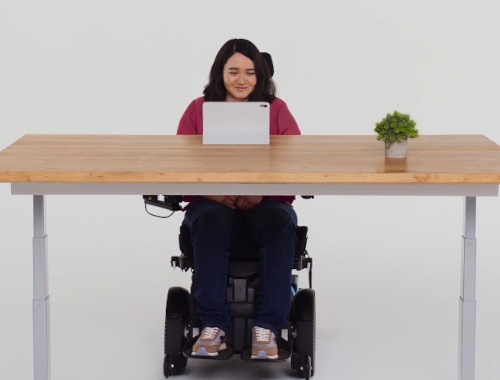 Apple has recently announced a groundbreaking accessibility feature that is set to transform the lives of individuals with physical disabilities: Eye Tracking. This innovative technology, designed for users with physical disabilities, allows them to navigate and control their iPad and iPhone devices using only their eyes. The feature, powered by artificial intelligence, uses the front-facing camera to set up and calibrate in seconds, ensuring a seamless user experience.
Eye Tracking is a significant advancement in accessibility technology, particularly for individuals who struggle with mobility or dexterity. This feature empowers users to interact with their devices independently, opening up new possibilities for communication, entertainment, and productivity. The technology is designed to be user-friendly and does not require additional hardware or accessories, making it accessible to a wide range of users.
The Eye Tracking feature is integrated across iPadOS and iOS apps, allowing users to navigate through app elements and activate specific functions using a dwell control mechanism. This technology not only enhances the user experience but also promotes independence and autonomy for individuals with physical disabilities.
Apple's commitment to accessibility is evident in the development of Eye Tracking, which is designed to be secure and private. All data used to set up and control the feature is kept securely on the device and is not shared with Apple, ensuring the privacy and security of users.
“We believe deeply in the transformative power of innovation to enrich lives,” said Tim Cook, Apple’s CEO. “That’s why for nearly 40 years, Apple has championed inclusive design by embedding accessibility at the core of our hardware and software. We’re continuously pushing the boundaries of technology, and these new features reflect our long-standing commitment to delivering the best possible experience to all of our users.”
The introduction of Eye Tracking technology marks a significant milestone in the advancement of accessibility features in the tech industry. As the demand for inclusive technology continues to grow, Apple's innovative approach to accessibility is likely to inspire other companies to follow suit, further enhancing the lives of individuals with physical disabilities.
Apple also announced Vision Pro updates for vision accessibility that will include the addition of Reduce Transparency, Smart Invert, and Dim Flashing Lights for users who have low vision, or those who want to avoid bright lights and frequent flashing. Features such as VoiceOver, Zoom, and Color Filters can also provide users who are blind or have low vision access to spatial computing, while features such as Guided Access can support users with cognitive disabilities. Users can control Vision Pro with any combination of their eyes, hands, or voice, with accessibility features including Switch Control, Sound Actions, and Dwell Control that can also help those with physical disabilities.
“Apple Vision Pro is without a doubt the most accessible technology I’ve ever used,” said Ryan Hudson-Peralta, a Detroit-based product designer, accessibility consultant, and cofounder of Equal Accessibility LLC. “As someone born without hands and unable to walk, I know the world was not designed with me in mind, so it’s been incredible to see that visionOS just works. It’s a testament to the power and importance of accessible and inclusive design.”