


Substantial Vision Improvements Achieved with Bionic Eye Technology in Clinical Trial
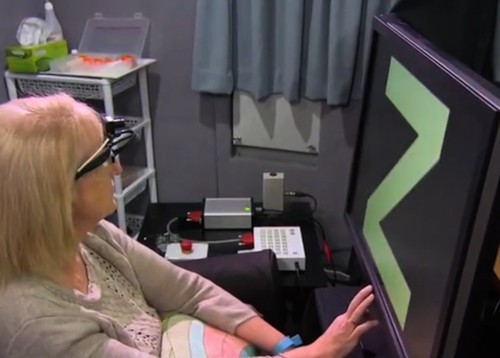 A recent clinical trial has demonstrated substantial improvements in functional vision, daily activities, and quality of life for patients with blindness caused by retinitis pigmentosa (RP). The trial, led by the Centre for Eye Research Australia, Bionics Institute, University of Melbourne, and Royal Victorian Eye and Ear Hospital, has shown promising results for the second-generation bionic eye developed by Australian company Bionic Vision Technologies.
The bionic eye, which consists of an electrode array surgically implanted behind the eye, receives signals from a video camera mounted on glasses that stimulate the patient's retina. This innovative technology has enabled patients to detect edges, shapes, and movement, significantly improving their navigation, mobility, and ability to detect objects.
Professor James Fallon, Head of Research at the Bionics Institute said: “The camera converts images into electrical pulses delivered by the electrode array that activate retinal cells and create flashes of light called phosphenes to help patients detect edges, shapes and movement.’’
The trial, which tracked patients from implant surgery in 2018 to 2021, found that the device remained stable and durable over the longer term, with 97% of electrodes functioning 2.7 years after the initial implant. Patients reported greater confidence in navigation, were more likely to explore new environments, and had reduced need for assistance when traveling.
Principal Investigator and vitreo-retinal surgeon Associate Professor Penny Allen said: “The bionic eye enabled blind patients to locate doorways, avoid obstacles and find items on table-tops. They reported greater confidence in navigation, were more likely to explore new environments and had reduced need for assistance when travelling to the local shops. Patients were also able to locate their spouse in a café and detect people moving at a train station – things they could not do without using their bionic eye.’’
The findings of this trial are a testament to the dedication and expertise of the research team and the potential of this technology to impact the lives of individuals with RP positively. As Bionic Vision Technologies continues to refine the vision processing capabilities, usability, and wearables of the bionic eye system, the prospect of making this technology available to patients worldwide becomes increasingly promising.
Dr Ash Attia, CEO of Bionic Vision Technologies said: “We are encouraged by the excellent results of the generation 2 Bionic eye trial. We are looking forward to finalise the development of the Generation 3 bionic eye and enter the worldwide pivotal trial and ultimately gain regulatory approval. Regulatory approval will allow us to make this important technology available to RP patients which will positively impact their lives”.
The full study can be accessed at: https://www.ophthalmologyscience.org/article/S2666-9145(24)00061-7/fulltext