
Web-Based Eye Test Shows Promise for Uncomplicated Refractive Assessments
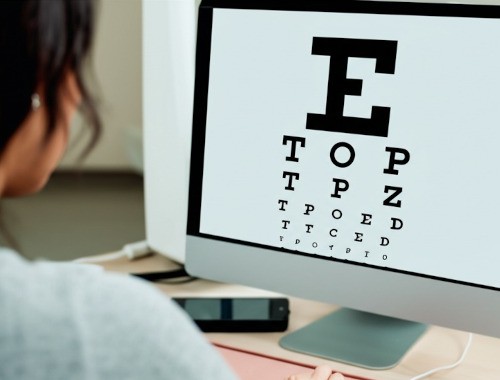 A recent study published in Nature Digital Magazine has demonstrated the real-world potential of a web-based eye test to increase access to care by providing a valuable alternative for uncomplicated refractive assessments. The study, which analysed data from 14,680 eyes, revealed that the online test shows promise in delivering accurate results for myopia, with 67% and 82% of myopes within ±0.5 and ±0.75D, respectively.
Addressing Preventable Vision Impairment
Refractive errors are the leading cause of preventable visual impairment worldwide, with myopia being the predominant refractive error in adults and kids. The prevalence of myopia is estimated to affect half of the world's population by 2050. In 2020, between 510 and 826 million people with presbyopia were reported to have visual impairment simply due to not wearing adequate reading glasses. The implications of visual impairment are severe, with over $205 billion estimated in reduced productivity yearly due to refractive errors.
The Potential of Telemedicine
Telemedicine offers a promising solution to address the stressed access to care. This online eye test provides a remote web-based assessment of visual acuity and refractive errors, offering scalability compared to in-clinic refractive methods. Participants can independently perform the test if they can control a phone and a computer.
Real-World Performance
The study focused on the algorithm performance of the web-based eye test in a real-world setting, analysing data from 14,680 eyes of healthy participants in an unsupervised home environment. The test demonstrated good accuracy for myopia, but had inconsistencies in distinguishing hyperopia.
Key Findings
-
The mean difference for myopes was 0.01D (SD 0.69), with 67% and 82% of myopes within ±0.5 and ±0.75D, respectively.
-
The test underestimated hyperopes, with 34% and 50% within ±0.5D and ±0.75D, respectively, and had inconsistencies distinguishing hyperopia.
-
Signation, or the determination of myopia or hyperopia, was correctly reported in 96% of cases in myopes, but only 44% of cases in hyperopes.
-
The online test underestimates hyperopia (mean difference -0.73D, SD 0.92), which can be put down to the involuntary accommodation reflex of the hyperopic eye and inconsistencies in the signation test.
-
When assessing the refractive results in absolute values, hyperopes were assessed with higher accuracy, with a mean difference of 0.05D (SD 0.61) and 0.18D (SD 0.64) for myopes and hyperopes, respectively.
-
Satisfaction rate of the current refraction, the time to perform the test, or the years between measurements didn't influence outcomes.
-
Case selection (high PDVA, high satisfaction) didn't negatively influence the results.
Limitations and Future Directions
The authors acknowledge that the online test is less precise compared to current refractive measures, and user errors are difficult to control in an unsupervised setting. However, they suggest that judicious re-testing can lead to higher test validity and partly solve the accuracy and outlier problem.
Conclusion
The study concludes that the web-based eye test has the potential to increase accessibility to eye care by delivering a valuable alternative for uncomplicated in-clinic refractive assessments. While acknowledging the limitations, the authors emphasise the potential of digital tools to address the increasing demands for eye-care and the rising prevalence of eye diseases.