
Magic Leap and Google Unveil AR Glasses Design
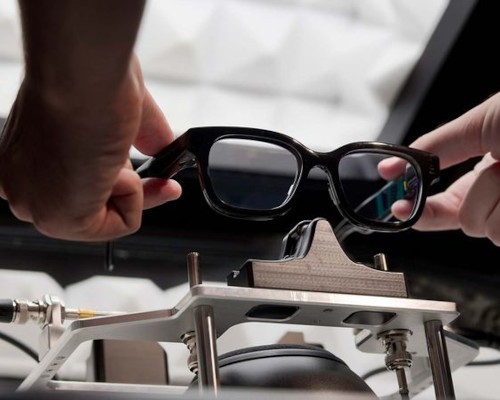 Google and Magic Leap, a company specialising in augmented reality (AR), have unveiled a first prototype of AR glasses. This presentation marks a decisive step in their collaboration. Established a few months ago, this partnership aims to develop an Android XR ecosystem and create commercial products in the smart glasses sector.
The model that was presented is not intended for commercial sale. It serves as an Android XR reference model for the entire market and illustrates the possibilities offered by the joint technologies of Google and Magic Leap to other manufacturers.
The prototype looks like a classic pair of glasses: discreet, lightweight, and compact. It incorporates Google's Raxium microLED technology, a miniature display projected directly onto the lenses.
The user can thus view information superimposed on the real world. The glasses also incorporate artificial intelligence (AI) functions.
The final product is designed to be "usable all day, accessible, and to offer a clear and stable image".
“Magic Leap’s optics, display systems, and hardware expertise have been essential to advancing our Android XR glasses concepts to life,” said Shahram Izadi, vice president and general manager of Google XR. “We’re fortunate to collaborate with a team whose years of hands-on AR development uniquely set them up to help shape what comes next.”
“Magic Leap’s evolution, from pioneering AR to becoming an ecosystem partner, represents the next phase of our vision,” said Ross Rosenberg, CEO of Magic Leap. “We’re drawing on years of innovation to help our partners advance AR technology and create glasses that are practical and powerful for everyday use by millions of people.”
The collaboration between the two companies focuses on creating prototypes that seek a balance between visual quality, comfort, and manufacturing capability.
The combination of Magic Leap's waveguides and optics with Google's Raxium microLED light engine makes everyday wearable AR more feasible, according to the two companies.
This could represent a turning point for the smart glasses sector. With this new prototype, Google aims to define the standard and unify a market that is still developing, notably by replicating the success of Android on smartphones.
“What makes this prototype stand out is how natural it feels to look through,” said Shahram Izadi. “Magic Leap’s precision in optics and waveguide design gives the display a level of clarity and stability that’s rare in AR today. That consistency is what makes it possible to seamlessly blend physical and digital vision, so users’ eyes stay relaxed and the experience feels comfortable.”
Magic Leap and Google are extending their collaboration through a three-year agreement, reinforcing their shared goal of creating technologies that advance the AR ecosystem.