

Greenland Shark Vision Study Offers Hope for Age-Related Eye Disease Treatment
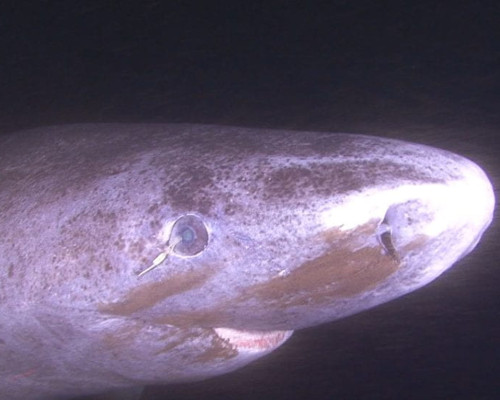 Groundbreaking research into the world's longest-living vertebrate reveals DNA repair mechanisms that could revolutionise how we approach retinal degeneration. Scientists at the University of California, Irvine have overturned long-held assumptions about Greenland shark vision, uncovering cellular mechanisms that could pave the way for new treatments for age-related eye conditions including macular degeneration and glaucoma.
The study, published in Nature Communications, challenges the decades-old belief that Greenland sharks are functionally blind, instead revealing sophisticated visual adaptations that enable these remarkable creatures to maintain healthy retinas for up to 400 years with no signs of degeneration.
From Blind Giant to Vision Pioneer
Associate Professor Dorota Skowronska-Krawczyk, who specialises in the molecular mechanisms of ageing and age-related eye diseases, became intrigued by Greenland sharks after reading a 2016 paper in Science that noted the frequent presence of parasites attached to their eyes.
"Evolutionarily speaking, you don't keep the organ that you don't need," explains Skowronska-Krawczyk. After reviewing video footage, she observed the sharks tracking light with their eyes, behaviour inconsistent with functional blindness.
Working with colleagues from the University of Basel, Switzerland, Skowronska-Krawczyk's team analysed eyeballs from sharks caught between 2020 and 2024 off Greenland's Disko Island. What they discovered has significant implications for human ophthalmology.
Key Clinical Findings
The research team found no signs of retinal cell death in the examined specimens, despite their extreme age. Critically, they identified that rhodopsin, the protein essential for scotopic vision, remains active in shark retinas and is specifically tuned to detect blue light, optimised for their deep-ocean habitat.
The study points to robust DNA repair mechanisms that enable these animals to maintain retinal function across centuries, a finding that could inform novel therapeutic approaches for age-related vision loss in humans.
Implications for Clinical Practice
For eyecare professionals, this research opens intriguing possibilities. Understanding how Greenland sharks preserve retinal tissue over such extended lifespans could lead to:
- New preventative strategies for age-related macular degeneration
- Novel treatment pathways for glaucoma
- Enhanced understanding of cellular mechanisms that maintain photoreceptor health
- Potential therapies targeting DNA repair pathways in retinal cells
PhD student and physician-scientist Emily Tom, who conducted the histological analyses, notes the unique opportunity this research presents: "We can learn so much about vision and longevity from long-lived species like the Greenland shark."
Future Research Directions
Skowronska-Krawczyk emphasises that the findings raise important questions about how vision evolves, the mechanisms that maintain tissue health over extended periods, and crucially, how this knowledge might translate to human applications.