
Smart Glasses Privacy Debate Heats Up: New App Alerts Users to Nearby Wearable Cameras
As courtroom drama and covert surveillance incidents put smart eyewear under the microscope, a new tool aims to give the public a say in who's filming them
The privacy implications of smart glasses are moving from theoretical concern to real-world flashpoint and the eyecare industry is squarely at the centre of the conversation.
In a scene that captured global attention last week, members of Meta CEO Mark Zuckerberg's entourage walked into a Los Angeles courthouse wearing Ray-Ban Meta smart glasses while Zuckerberg testified in a landmark social media addiction trial. Judge Carolyn Kuhl did not mince words. "If you have done that, you must delete that, or you will be held in contempt of the court," she warned. "This is very serious." The glasses were removed immediately, though at least one person was later spotted still wearing them in a courthouse hallway near jurors.
The incident was a high-profile illustration of a challenge that is rapidly becoming unavoidable: how do you ban recording devices when they're indistinguishable from regular eyewear?
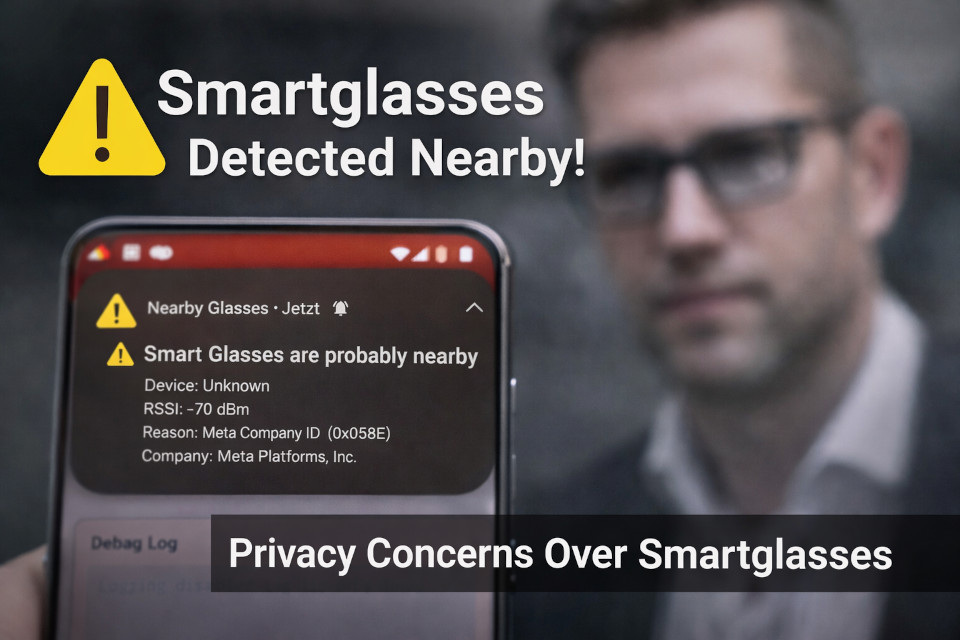
Into this climate comes Nearby Glasses, a new Android app developed by Yves Jeanrenaud, a professor at the University of Applied Sciences in Osnabrück, Germany. The application works by scanning for Bluetooth Low Energy signals and alerting users when smart glasses, specifically targeting identifiers associated with manufacturers such as Meta and EssilorLuxottica, are detected nearby.
Jeanrenaud describes the project as what he calls a "small act of resistance against surveillance technologies." In a deliberate move to build trust, the app is free, collects no personal data, and its source code is publicly available on GitHub.
The app is currently available on Google Play but has not yet appeared on Apple's App Store.
There are acknowledged technical limitations. The app can generate false positives, occasionally confusing smart glasses with certain VR headsets or other similar Bluetooth devices, and it can only detect devices with Bluetooth switched on. Still, for consumers concerned about being filmed without consent, it represents one of the first accessible tools designed specifically to address smart eyewear.
The timing matters. Sales of Meta Ray-Ban glasses more than tripled in 2025, according to Zuckerberg's own testimony, and the category is only expanding. Apple is widely reported to be developing its own smart glasses, and a range of other manufacturers are pushing into the space.
With that growth comes intensified scrutiny. Schools, hospitals, gyms, and other privacy-sensitive spaces face enforcement challenges that existing policy frameworks were never designed to handle. The courtroom incident in Los Angeles is emblematic of a broader institutional reckoning and it is one the eyecare sector cannot afford to ignore.
For optical dispensers and practice owners, the proliferation of smart frames sold under well-known eyewear brands raises questions that go beyond the technical. Patients visiting a practice may reasonably wonder whether a staff member's glasses are recording. A customer browsing frames in a retail environment carries similar concerns. As the line between prescription eyewear and surveillance hardware continues to blur, the profession may find itself navigating conversations about patient privacy that extend well beyond clinical governance.
The emergence of a dedicated detection app, however imperfect, signals that consumers are beginning to push back. For the industry, this creates both a reputational consideration and a practical one. Practices and retailers that proactively address smart glasses policies, whether through updated staff guidelines or clear in-store signage, are likely to be better positioned as community awareness grows.
It also raises a broader question about the role of the eyecare sector in shaping how these products are understood and used. As dispensers and optometrists become one of the primary points of contact for consumers acquiring smart eyewear, the profession is well placed to provide guidance on responsible use before regulators and courts are forced to fill that gap.