


Eye Movement Tests Detect Brain Trauma More Than a Decade After Concussion
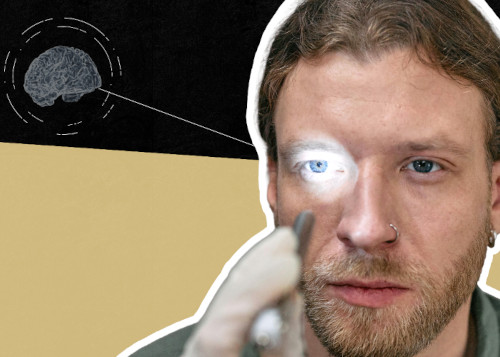 New US research points to a valuable, and underutilised, role for eye movement assessment in long-term concussion management.
Specialised eye movement testing can reveal persistent brain differences in patients years even more than a decade after a mild traumatic brain injury (mTBI), according to new research from the University of Colorado Anschutz Medical Campus.
The findings, published in the Journal of Neuro-Ophthalmology, have significant implications for optometrists and ophthalmologists involved in concussion care, rehabilitation, and long-term patient monitoring.
The study, led by Associate Professor Jeffrey Hebert PhD, PT, director of research at the CU Anschutz Marcus Institute for Brain Health, evaluated 78 military veterans, 38 with a history of mTBI and 40 without. Participants completed a battery of eye movement tasks alongside cognitive tests designed to measure executive function, attention, processing speed, and impulse control.
Veterans with prior concussions were more likely to demonstrate slower and less accurate eye movements, along with reduced performance on attention-based tasks. Crucially, some of these measurable differences persisted more than 10 years after the original injury.
Why the Eyes Hold the Answers
The study reinforces what many in the eyecare profession have long suspected: the visual system offers a direct, measurable window into brain health.
"The eyes are directly connected to brain networks that control attention, information processing and decision-making," said Hebert. "By studying how someone's eyes move during a cognitively demanding task, we can detect subtle brain changes that might not appear on a standard bedside exam or brain scan."
The tasks used in the study required participants to rapidly look away from a visual target and to quickly recognise and verbalise a viewed object; tests that challenge not only visual function but also cognitive control, including the ability to suppress impulses and respond accurately under pressure. Because these processes depend on widespread neural networks, even mild but repeated injury can leave lasting, difficult-to-detect effects.
"Even when someone feels recovered, their brain may still be working differently behind the scenes, especially during visually demanding tasks and in busy environments," Hebert said.
A Gap in Standard Concussion Assessment
One of the study's most clinically relevant observations is the inadequacy of conventional imaging in identifying long-term mTBI sequelae. Standard MRI scans frequently appear normal following mild brain injury, leaving patients without objective evidence of ongoing dysfunction.
Cognitively challenging eye movement assessments, the researchers argue, may provide clinicians with an additional objective tool to better understand ongoing cognitive concerns and more precisely tailor rehabilitation strategies.
For Australian eyecare practitioners, particularly those working in sports vision, neuro-optometry, or allied health settings, this represents a potentially important expansion of scope. Eye movement testing platforms are increasingly accessible in clinical practice, and this research suggests their utility extends well beyond traditional visual function assessment.
Broader Applications Beyond Veterans
While the study population consisted of military veterans, the researchers were clear that the findings are likely applicable more broadly to athletes, first responders, and civilians who have experienced concussions through sport, motor vehicle accidents, or falls; a demographic that represents a substantial proportion of routine optometric and ophthalmological patients in Australia.
With an estimated 100,000 sport-related concussions occurring in Australia each year, the majority in community sport, and many still going undocumented, and awareness of chronic traumatic encephalopathy (CTE) and long-term mTBI sequelae growing among the public and sporting codes alike, practitioners who can offer objective, evidence-based assessments stand to play an increasingly important role in patient care pathways.
The research team emphasised that most individuals do recover well from mTBI. However, identifying those who continue to experience subtle neurological effects could meaningfully improve follow-up care, long-term monitoring, and treatment planning.
What Comes Next
Future studies will explore whether incorporating cognitively challenging eye movement testing into routine concussion evaluations could help clinicians better identify traumatic brain injury, track recovery over time, and guide treatment decisions.