


Science Corp Raises U$230M to Commercialise Retinal BCI Implant With Australian Trials on the Horizon
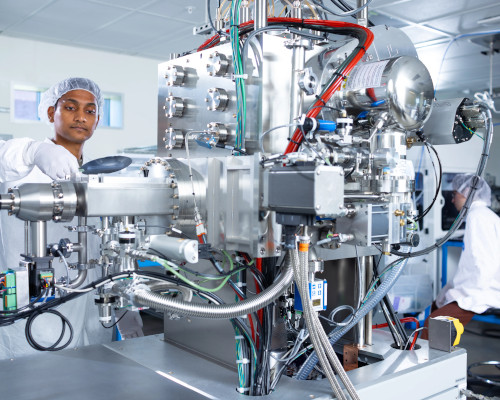 The US neural engineering company behind a breakthrough retinal implant has secured US$230 million in Series C funding, with plans to expand clinical trials to Australia targeting inherited retinal diseases including Stargardt disease and retinitis pigmentosa.
San Francisco-based Science Corp has closed a heavily oversubscribed Series C financing round, bringing total investment in the company to approximately US$490 million since its founding in 2021. The round attracted continued backing from Khosla Ventures, Lightspeed Venture Partners, Y Combinator, IQT, and Quiet Capital, among others.
The capital will primarily fund the commercial rollout of PRIMA, the company's brain-computer interface (BCI) retinal implant, along with broader pipeline development and infrastructure expansion.
What is PRIMA?
PRIMA functions as an artificial photoreceptor array implanted in the retina, designed to restore central vision in patients blinded by degenerative macular conditions. In clinical trials conducted in Europe across 38 patients with advanced dry age-related macular degeneration (AMD), 80 per cent of participants demonstrated meaningful improvement in visual acuity, with many able to read letters, numbers, and words. The results, published in The New England Journal of Medicine, represent the first time any treatment has successfully restored form vision in this patient population.
Science has since submitted a CE mark application to the European Union and filed with the US Food and Drug Administration for regulatory approval. The company expects PRIMA to launch commercially in Europe in the near term, which would make it the first BCI company to bring a vision restoration product to market.
The Australian Connection
For eyecare professionals in Australia, the announcement carries particular relevance. Science has confirmed it will expand its PRIMA trial program to include Stargardt disease and retinitis pigmentosa, two of the most prevalent causes of inherited retinal vision loss in young adults, with initial trials to be conducted at Sydney Eye Hospital.
Leading the Australian arm of the research will be Dr Matthew Simunovic, MB BChir, PhD, a retinal disease specialist and early pioneer in prosthetic vision research. Stargardt disease affects approximately 1 in 10,000 people, while retinitis pigmentosa affects around 1 in 4,000, conditions for which there are currently very limited treatment options.
The inclusion of Sydney Eye Hospital positions Australia as a meaningful node in the global BCI clinical landscape, and local ophthalmologists and optometrists can expect to see increasing patient interest in the trials as awareness grows.
Industry Significance
Science CEO and co-founder Max Hodak framed the company's ambitions in broad terms. "The brain is the ultimate central object of medicine — it is the only organ which is not, even in principle, transplantable," he said. "We are deeply committed to research and new technologies that can provide treatment options where none existed before."
Chief Strategy Officer Darius Shahida was more pointed about near-term commercial objectives: "Our imperative is to become the first BCI company to scale and achieve profitability."
Beyond PRIMA, Science is also developing a suite of technologies including Biohybrid neural interface technology, a vessel perfusion platform, a MEMS Foundry, and a broader BCI ecosystem, suggesting the company's ambitions extend well beyond retinal disease alone.
What This Means for Eyecare Professionals
For Australian optometrists and ophthalmologists, the Science announcement is worth watching closely. The PRIMA system targets a patient population, those with late-stage macular degeneration and inherited retinal dystrophies, that many practitioners see regularly and currently have limited options to offer beyond low vision aids and supportive care.
With Australian trials now confirmed and regulatory submissions underway in Europe and the US, the pathway from clinical trial to referral pathway, while not imminent, is becoming more defined. Practitioners with patients who may be candidates for the expanded Stargardt or retinitis pigmentosa trials are encouraged to monitor developments at Sydney Eye Hospital.