


Stanford Research Rewrites What We Know About Early Visual Processing
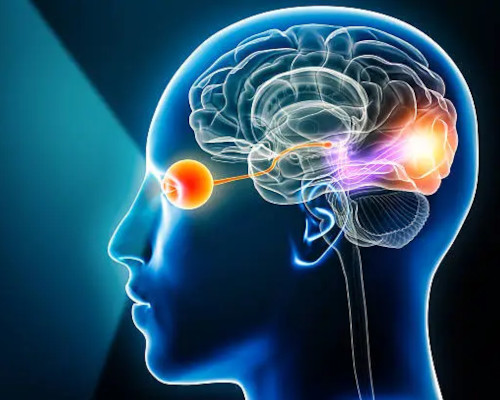 A landmark study published in Nature Neuroscience has upended decades of thinking about how the primary visual cortex works with implications that stretch from the clinic to the world of artificial intelligence.
Researchers at the Tolias Lab, based at the Byers Eye Institute at Stanford University in collaboration with the University of Göttingen, have identified a previously unknown structural organisation in the neurons of the primary visual cortex (V1) one that suggests the brain begins separating objects from their backgrounds far earlier in the visual processing chain than the field has long assumed.
The findings, published in Nature Neuroscience and entitled "Functional bipartite invariance in mouse primary visual cortex receptive fields," challenge a foundational model that has guided vision science for generations.
Rethinking the Visual Cortex
For decades, neuroscientists have understood the visual cortex to function much like a sketch artist, breaking down the world into simple, well-defined edges, such as the borders where light meets shadow, before higher-level brain regions integrate these into complex representations.
The new research overturns that simplistic picture. The team discovered that neurons in the primary visual cortex utilise a specialised "bipartite," or two-part structure. Each neuron monitors a specific, tiny workspace within our field of vision, known as a receptive field, and this workspace is divided into two distinct subfields: one zone responds to precise, fixed spatial patterns, while the other zone is more flexible, remaining responsive to textures even as their position shifts.
"Historically, we have understood that simple and complex cells are tuned to detect basic edges defined by changes in light and shadow," said Andreas Tolias, PhD, professor of ophthalmology at the Byers Eye Institute. "The key discovery is that these neurons have a bipartite structure where part of the receptive field tolerates shifts in texture position while the other part stays fixed."
In short: the brain's figure-ground separation, the ability to instantly pick a face out of a crowd, or read text on a busy background, is not a higher-order feat. This bipartite organisation allows the brain to begin differentiating an object from its background at the earliest stages of vision, even within complex or noisy environments.
A Digital Twin of the Brain
The methodology underpinning the discovery is itself noteworthy for clinicians and researchers following the intersection of AI and vision science.
The team recorded the activity of thousands of neurons in response to varied stimuli, then trained an artificial intelligence model to act as a "digital twin" of the brain, enabling them to test neural responses to a vast array of images with high accuracy. These digital predictions were rigorously verified through targeted experiments in living mice.
The team also drew on large-scale connectomics data to ground their functional findings in physical anatomy. By analysing a high-resolution functional connectomics dataset, a comprehensive map of the brain's wiring, the team provided the first direct evidence of how this visual processing is physically organised, finding that neurons with simpler functional roles tend to connect to those with more complex roles within the same cortical layer.
Relevance for Vision Disorders and AI
While the study was conducted in mouse models, the researchers are clear about the broader significance of their work. Understanding how the brain performs this kind of visual separation is useful for both neuroscience and artificial intelligence, and insights into how the brain interprets visual information help lay a foundation that could allow scientists to better understand vision disorders and inspire new approaches to computer vision technology.
Tolias also drew a striking parallel between biological and machine vision: "Interestingly, artificial intelligence models trained on object recognition develop similar detectors, suggesting this may be a fundamental solution for boundary detection in both biological and artificial vision."
For eyecare professionals, the study reinforces the importance of understanding the visual pathway not merely as a passive relay system, but as an active, hierarchical processor, one whose earliest layers are already doing heavy computational lifting. As research into conditions such as amblyopia, cortical visual impairment, and low vision rehabilitation continues to evolve, findings like these provide a stronger neurobiological framework for understanding why patients see the way they do.