


Single Drop Of Low-Dose Atropine Triggers Functional Eye Changes Without Structural Impact, US Study Finds
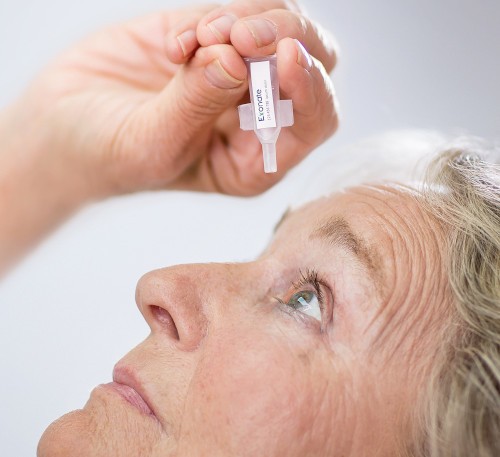 New research sheds light on the short-term ocular mechanisms of atropine; findings with direct relevance for practitioners managing myopia in clinical practice
Researchers at the University of Houston (UH) College of Optometry have published new findings confirming that a single instillation of low-dose atropine produces meaningful functional and vascular changes in the eye within one hour, without altering axial length or retinal and choroidal structure over a 24-hour period, a distinction that may have important implications for how clinicians interpret and communicate treatment responses to patients.
The peer-reviewed study, led by Professor of Optometry Lisa Ostrin and postdoctoral researcher Barsha Lal and published in the journal Eye and Vision, is among the first to systematically compare the short-term ocular effects of four low concentrations of atropine — 0.01%, 0.025%, 0.05%, and 0.1% — within the same participants using a double-masked, randomised, repeated-measures design.
What the study measured
Twenty healthy adults aged 18–35 years received a single drop of placebo or one of four atropine concentrations across five separate sessions, each spaced one to three weeks apart. Using spectral-domain OCT and OCT angiography (OCTA), researchers assessed retinal and choroidal thickness, axial length, perfusion density in the superficial and deep vascular complex and choriocapillaris, and foveal avascular zone area at baseline, one hour, and 24 hours post-instillation.
The cohort included 12 myopes, six emmetropes, and two hyperopes, with a mean spherical equivalent refraction of −1.91 ± 2.24 D.
Key findings
No statistically significant changes were detected in axial length, retinal thickness, or choroidal thickness at any concentration or time point, a finding at odds with some earlier studies that reported modest choroidal thickening following 0.01% atropine in myopic adults.
The researchers noted this likely reflects the difference between a single instillation and the cumulative ocular absorption that occurs with daily dosing over weeks and months. As the authors point out, the choroid's response to atropine in long-term studies has itself been inconsistent across the literature, with some research showing thickening, others showing thinning, and others showing no change at all.
However, one significant change was detected: perfusion density in the superficial vascular complex within the 1.0–2.5 mm parafoveal annulus decreased significantly at one hour (−1.3% ± 1.2%, P = 0.03), before returning toward baseline by 24 hours. This time-dependent reduction was not concentration-dependent, suggesting the effect reflects an acute physiological response rather than a dose-response relationship.
The deep vascular complex, choriocapillaris, and foveal avascular zone all remained unchanged across all concentrations and time points.
What this means for practice
"These findings indicate that a single instillation of atropine does not alter axial length or retinal or choroidal thickness over 24 hours but may transiently affect superficial retinal perfusion in a time-dependent manner," said Ostrin.
The transient reduction in superficial vascular perfusion density is interpreted by the authors as potentially reflecting a redistribution of blood flow, possibly secondary to atropine-induced increases in overall blood flow volume. They suggest that medium-sized and larger vessels dominating the 1.0–2.5 mm annulus of the superficial vascular complex may make this region more sensitive to acute vasoactive effects than the predominantly capillary-composed deep vascular complex or choriocapillaris.
Importantly, the study also confirmed robust ocular penetration even at the lowest concentrations tested. As part of the same broader study, a previously published companion paper demonstrated significant, dose-dependent changes in pupil size and accommodation at both one hour and 24 hours, validating that even 0.01% atropine is pharmacologically active following a single drop.
Broader context
Myopia is on track to affect approximately 50% of the global population by 2050, making effective and well-understood management strategies an urgent public health priority. Atropine remains the most widely used pharmacological intervention for slowing myopia progression in children, yet the precise mechanisms driving its efficacy remain incompletely understood.
Study strengths and limitations
The study's key methodological strengths include the within-subject comparison of multiple concentrations, the double-masked design, tightly controlled imaging timing to minimise diurnal variation, and automated OCT segmentation. Limitations include the single-instillation design (limiting applicability to daily dosing scenarios), the exclusion of high myopes, and a relatively small sample of 20 participants which the authors acknowledge may have limited statistical power to detect smaller effects.
The authors call for future studies to examine cumulative effects of daily instillation, to include myopic children across a range of ages, and to assess total choroidal perfusion using tools such as laser speckle flowgraphy.