HOYA's MiYOSMART iQ Halts Myopia Progression in Nine Out of Ten Children in Landmark Clinical Trial
 Groundbreaking 12-month RCT results presented at ARVO 2026 show the next-generation spectacle lens achieving over 100% myopia control efficacy in children aged 7–12, with world-first efficacy data in children as young as four.
HOYA Vision Care has unveiled what it describes as a generational leap in myopia management, with clinical trial data showing its new MiYOSMART iQ spectacle lens effectively halted clinically relevant myopia progression in nine out of ten children over 12 months of wear, the highest efficacy results ever reported for a Defocus Incorporated Multiple Segments (D.I.M.S.) Technology-based spectacle lens.
The results were presented this week at the Association for Research in Vision and Ophthalmology (ARVO) 2026 Annual Meeting in Denver, in collaboration with The Hong Kong Polytechnic University.
The trial findings
The randomised controlled trial enrolled 196 schoolchildren in Hong Kong aged 4–12 years with myopia. In children aged 7–12, the age range most commonly studied in myopia control RCTs, MiYOSMART iQ demonstrated a myopia control efficacy of over 100% in spherical equivalent refraction (SER) and 94% in axial length (AL) over 12 months. Mean SER change was +0.155D in the MiYOSMART iQ group compared to −0.511D in the single vision control group, while mean axial elongation was just 0.019 mm versus 0.310 mm in controls.
Across the full 4–12 age cohort, mean SER change was +0.046D in the MiYOSMART iQ group versus −0.534D in controls, with axial elongation reduced to levels below or comparable to emmetropic eye growth, a significant benchmark for practitioners managing myopia in young patients.
"Until today, no trial conducted on a myopia control spectacle lens has shown this level of effectiveness in controlling the condition," said John Goltermann Lassen, CEO of HOYA Vision Care.
A world first in early-onset myopia
Perhaps most significant for clinicians is the trial's inclusion of children aged 4–6 years, a younger cohort than has typically been studied in D.I.M.S.-based lens trials. In this group, MiYOSMART iQ demonstrated a myopia control efficacy of 65% in SER and 44% in AL at 12 months, setting a new benchmark in early-onset myopia management at a time when the condition is progressing most rapidly.
"Beyond stopping myopia progression on average over a period of 12 months and across childhood stages, these findings demonstrate, for the first time with myopia control spectacle lenses, efficacy in children from 4 years of age," said Dr. Natalia Vlasak, HOYA Vision Care's Global Head of Medical and Scientific Affairs.
The ability to intervene from age four is clinically meaningful. Initiating effective myopia control early in life reduces cumulative progression and substantially lowers the long-term risk of high myopia and associated sight-threatening complications such as myopic maculopathy and retinal detachment.
Triple Enhanced Design: what's changed
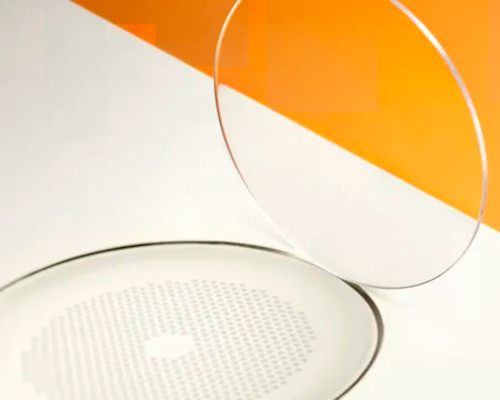
MiYOSMART iQ builds on the established D.I.M.S. platform with what HOYA calls Triple Enhanced Design (TED). Three key modifications drive the improved outcomes: defocus segments repositioned closer to the geometric centre of the lens to more continuously stimulate the near-peripheral retina, identified in recent research as a retinal "sweet spot" highly responsive to myopic defocus signals; a higher defocus power delivering a stronger defocus stimulus; and an extended treatment zone providing broader coverage of the peripheral visual field, particularly useful with larger contemporary frames.
"The Triple Enhanced Design was built on a deep understanding of how the eye responds to a myopic defocus signal, and a determination to push the boundaries of what spectacle lenses could achieve," said Prof. Chi-ho To, Visiting Chair Professor of Experimental Optometry at The Hong Kong Polytechnic University.
All age groups in the trial showed high compliance with daily, all-day wear, a practical consideration that will resonate with optometrists managing young patients and their families.
Context for Australian practitioners
With myopia projected to affect approximately half the global population by 2050, and rates already elevated in Australian children, particularly those of East Asian heritage, the results carry direct relevance for local practice.
Prof. Serge Resnikoff, Chair of the International Myopia Institute, was blunt in his assessment at a press briefing ahead of ARVO: "Unaddressed myopia today becomes irreversible vision loss tomorrow. If we delay, this epidemic will define the next generation."
MiYOSMART iQ represents the latest evolution of a platform that has sold more than 15 million lenses across 50-plus countries since its 2018 launch, backed by over 100 peer-reviewed publications. For ECPs looking to expand or strengthen their myopia management offering, the new 12-month clinical evidence gives the iQ a compelling evidence base at the highest tier of study design.
Availability of MiYOSMART iQ in Australia is subject to local approval. Contact your HOYA Vision Care representative for further information.
(image credit HOYA)