


Belgian Neurotech Firm Secures €4M to Push Cortical Vision Implant Toward Human Trials
ReVision Implant's brain-based visual prosthesis, designed to work where retinal and optic nerve therapies cannot, is heading into first-in-human studies as early as Q3 this year.
Belgian neurotechnology company ReVision Implant has closed an oversubscribed €4 million funding round from private investors, in a move that brings its cortical visual prosthesis meaningfully closer to clinical reality.
The round attracted both returning investors and new backers, including prominent European business leaders and experienced medtech operators. It adds to a growing base of public support that includes multiple European Innovation Council (EIC) grants among them the €2.4 million FlairVision project as well as backing from the Plug & Play and imec istart incubators.
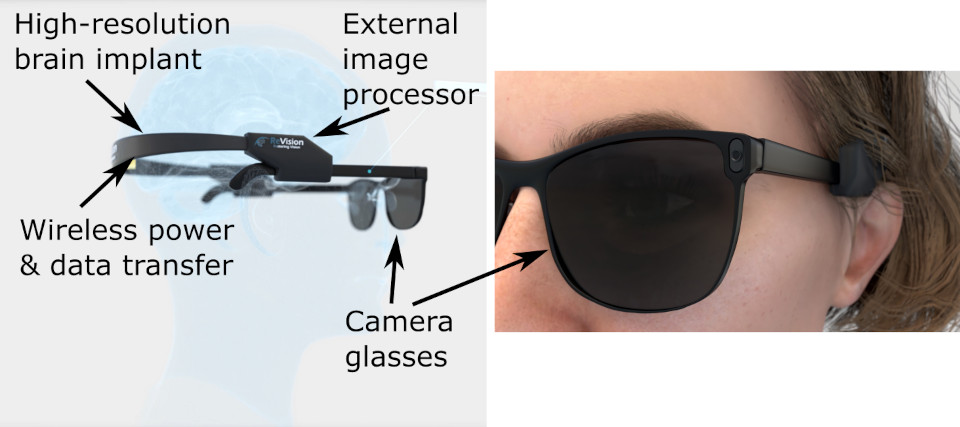
For eyecare professionals, the technology is worth understanding: unlike retinal implants or optic nerve stimulators, ReVision's system works by interfacing directly with the primary visual cortex, entirely bypassing the eye and optic nerve. According to the company, this means the device could be effective in approximately 95% of blindness cases, the main exceptions being blindness caused by tumour or haemorrhage in the visual cortex itself, and congenital blindness in patients who did not receive an implant before the age of five (in whom the visual cortex may not have developed normally).
That reach extends well beyond the patient populations addressable by current retinal implant technologies, and may be of particular relevance for clinicians managing patients with conditions such as advanced glaucoma, traumatic optic neuropathy, or other causes of irreversible vision loss upstream of the cortex.
In-House Manufacturing and Regulatory Milestones
The new funds will be directed toward setting up proprietary cleanroom facilities development of which began three months ago as well as team expansion, regulatory compliance, and clinical programme advancement.
CEO Frederik Ceyssens said the funding marks a transition from development to clinical and operational scale-up. "We are investing in our own cleanroom environment to bring important manufacturing steps in-house, while expanding our team and advancing our regulatory compliance and clinical programme over the coming years," he said. "At the same time, we are continuing product development and strengthening our collaborations with other medtech companies as we move closer to bringing our technology to patients."
The company has also received Breakthrough Device designation from the US Food and Drug Administration (FDA), a status that typically provides more frequent FDA interaction and prioritised review, and signals the agency's recognition of the technology's potential to address an unmet need.
Human Trials on the Near Horizon
ReVision's first-in-human study has received regulatory approval, with the first phase scheduled for Q3 2026. A longer-term implant study in a blind volunteer is planned for 2027. The company notes that current trial-phase devices are experimental prototypes with electronics not yet fully miniaturised, and that development of a fully implantable, wireless version is already underway.
The implant technology itself grew from research into high-resolution brain-computer interfacing at the unversity KU Leuven, Belgium. Its key differentiator lies in the ability to place hundreds to thousands of durable microelectrodes into the brain with minimal tissue disruption. The company also employs resolution-enhancement techniques, so-called "virtual electrodes", to extend the effective resolution of stimulation across the whole primary visual cortex. Notably, the insertion system does not require robot-assisted surgery, meaning it could potentially be deployed across a broader range of hospital settings without significant capital investment.
Broader Implications for Neurotech and Vision Rehabilitation
ReVision's progress sits within a wider surge of interest in high-bandwidth neurotechnology. The company notes that improved brain-interfacing capability is becoming the foundation for devices targeting quadriplegia, locked-in syndrome, limb loss, aphasia, and blindness conditions for which current options remain severely limited.
For Australian eyecare professionals, particularly those working in low vision rehabilitation or managing end-stage retinal and optic nerve disease, developments in cortical prosthetics represent a frontier that is moving from laboratory to clinic faster than many anticipated. While ReVision's device remains in the investigational phase, the regulatory approvals and funding trajectory suggest it is one to watch closely over the next two to three years.