


Eye Shape Could Hold the Key to Predicting Pathologic Myopia Progression, Long-Term Study Finds
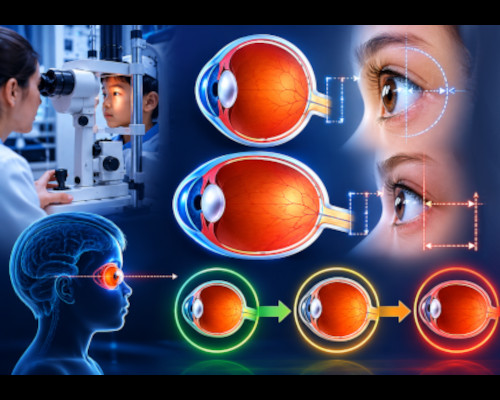 MRI-defined globe morphology outperforms traditional risk metrics in stratifying long-term outcomes, with nasally distorted eyes carrying the greatest burden of disease.
New research spanning 15 years suggests that the shape of a patient's eye, as defined by high-resolution MRI, may be a stronger predictor of pathologic myopia progression than conventional measures like axial length and refractive error alone, with significant implications for how clinicians monitor and manage high-risk patients.
The prospective cohort study, published in JAMA Ophthalmology, followed 78 participants with high myopia (≤ -6.00D in both eyes) at a single centre in China over 15 years, classifying eyes into six morphological subtypes: spheroidal, ellipsoidal, conical, nasally distorted, temporally distorted and barrel shaped. The findings reveal a clear hierarchy of risk tied to globe morphology, with nasally distorted and conical eyes consistently demonstrating the worst long-term structural and functional outcomes.
What the Data Shows
Of the 152 eyes included in the analysis, the majority at baseline were spheroidal (54.6%), followed by nasally distorted (16.4%) and conical (15.1%). Over the follow-up period, axial elongation progressed along a morphology-dependent gradient from the slowest rate in spheroidal eyes at 0.045mm per year, to the fastest in nasally distorted eyes at 0.095mm per year.
Nasally distorted eyes elongated at a rate 0.050mm per year faster than spheroidal eyes, and carried more than five times the odds of rapid elongation (OR 5.74). Deformed eyes as a group showed a sevenfold higher risk of macular choroidal thinning (OR 7.24) compared with non-deformed eyes, while their overall risk of posterior staphyloma development was nearly three times greater (OR 2.75).
Visual field defects were also significantly more prevalent in nasally distorted and conical eyes, with both subtypes demonstrating the greatest deterioration in best-corrected visual acuity over the study period.
"Among the six morphological subtypes, nasally distorted eye showed the highest overall risk, with rapid axial elongation, accelerated choroidal thinning and marked deterioration in both BCVA and VF," the authors wrote, adding that eye shape "provides prognostic information beyond axial length, supporting individualised surveillance and precision intervention strategies" in pathologic myopia.
Clinical Implications for Eye Care Practitioners
For optometrists and ophthalmologists managing patients with high myopia, the findings point toward a future where MRI-based globe morphology could become a meaningful addition to the clinical workup. Rather than relying solely on axial length measurements or refractive error thresholds, a morphology-informed approach could help identify which patients warrant more aggressive monitoring intervals or earlier intervention.
While MRI is not a routine tool in most optometric settings, the research supports a growing body of evidence that the structural heterogeneity of highly myopic eyes cannot be adequately captured by conventional metrics and that some patients facing significantly elevated risk may currently go undetected.
Limitations and the Road Ahead
An invited commentary by Professor Kyoko Ohno-Matsui, chair of Ophthalmology and Visual Science at Tokyo Medical and Dental University, acknowledges the study as "an important and timely contribution" but flags several methodological considerations that the field will need to address.
Chief among these is the issue of foveal displacement. In highly myopic eyes, the fovea frequently sits away from the deepest point of the globe, which may introduce bias when estimating true axial elongation relative to overall globe deformation. Professor Ohno-Matsui also noted that eye shape was classified from baseline MRI only, raising questions about whether globe morphology itself changes over time and how any such transitions might relate to disease progression.
"Repeated 3D-MRI imaging in the same cohort would be highly valuable to determine whether eyes transition between subtypes and how such changes relate to disease progression," she wrote.
The commentary also calls for further investigation into the biomechanical mechanisms at play particularly in nasally distorted eyes, where changes in peripapillary curvature may exert mechanical stress on the optic nerve.
Despite these caveats, Professor Ohno-Matsui's conclusion was broadly optimistic: "This study provides strong longitudinal evidence that eye shape is a key determinant of long-term outcomes in pathologic myopia. It moves the field beyond conventional metrics toward a more comprehensive understanding of ocular biomechanics."
The study, authored by Xiong R, Tan S, Li Y et al., was published online in JAMA Ophthalmology on 28 May 2026. The accompanying commentary by Professor Ohno-Matsui appeared in the same issue.