


Eye Surgeons Fire Back at Fee "Scapegoating" as Insurer Profits Hit Record $2.13bn
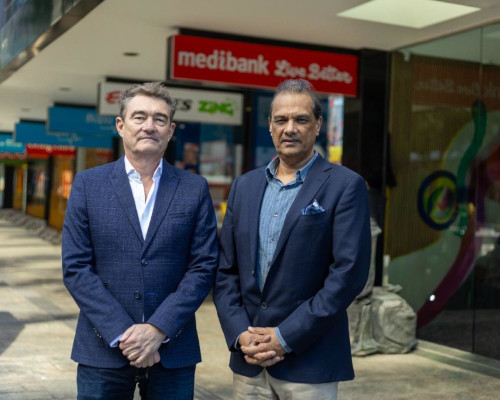 The Australian Society of Ophthalmologists has taken aim at private health insurers and the federal government, accusing them of deflecting blame onto specialists while pocketing billions and letting Medicare erode.
The Australian Society of Ophthalmologists (ASO) is pushing back hard against what it calls a false narrative around specialist out-of-pocket costs, arguing that eye surgeons are being made the villains of a healthcare crisis they didn't create.
In a recent media release, ASO board member Professor Ashish Agar and President Dr Peter Sumich pointed to a confluence of systemic failures, i.e. stagnant Medicare rebates, record private health insurer profits, and overflowing public hospital waitlists, as the true drivers of patient affordability pressures.
"We didn't create this situation," Professor Agar said. "But somehow we're being made to wear it because it plays well in the news."
Medicare rebates "underwater for decades"
The ASO is drawing attention to data from the Australian Medical Association showing that while average wages and the consumer price index have more than quadrupled since 1985, Medicare rebates have barely doubled over the same period. That gap, the Society argues, has left practices absorbing rising costs with dwindling government support.
"Eye surgeons run small businesses. Not multinationals, not hedge funds — small businesses, subject to every inflationary pressure that every other small business in Australia is grappling with right now," Professor Agar said. "What the government regards as specialist fees is actually business revenue that keeps the show on the road."
Costs flagged by the ASO include electricity, rent, insurance, wages, medical technology, cybersecurity and IT infrastructure, and compliance and registration fees, all of which have risen sharply.
Public system overflow pushing patients private
Professor Agar said a critical and underreported dimension of the out-of-pocket debate is why so many patients end up in the private system in the first place. He pointed to the AMA's 2025 Public Hospital Report Card, which found patients routinely waiting beyond clinically safe timeframes, a particularly serious problem in ophthalmology.
"Glaucoma doesn't wait. Diabetic retinopathy doesn't wait. Eyelid cancer doesn't wait. When someone loses vision because they couldn't get timely public care, no amount of out-of-pocket coverage makes that better," he said.
"We are absorbing the overflow of a system that is buckling. We are there for patients when the public system can't be."
Insurers post $2.13bn profit while shortchanging care
The ASO's sharpest criticism was directed at private health insurers. The sector recorded a record $2.13 billion in profit in 2024-25, with premium increases of up to five per cent, the steepest rise since 2017. Despite this, insurers returned just 84.25 per cent of premium revenue to hospitals and healthcare providers, well below the industry benchmark of 88 per cent.
The ASO calculates that since 2022, this gap has amounted to a $4 billion shortfall, funds paid in premiums by 12.5 million Australians that never reached frontline medical care.
"Health insurers are profiting more and paying themselves more, and somehow the story is about specialist fees," Dr Sumich said. "I'd like someone to explain that logic to me."
Cataract cover confusion in the crosshairs
The ASO also called out what it describes as deliberate misdirection in how insurers market surgical cover to consumers. Cataract surgery, the most commonly performed eye procedure in Australia, is only covered under Gold-level policies, yet the Society says insurers have spent years steering customers toward cheaper Silver tiers that exclude it, without making the distinction clear at point of sale.
"The insurer collected the premium. The insurer recommended the downgrade. The insurer posted the profit," Dr Sumich said. "And when the patient can't afford their surgery, who gets made out as the villain? The surgeon!"
The ASO is calling on the federal government to address the decades-long erosion of Medicare rebates and urging greater scrutiny of private health insurer conduct, rather than what it characterises as politically convenient attacks on specialist fees.
(picture: ASO President Dr Peter Sumich & Board Member Professor Ashish Agar; credit: ASO)