


New Research Pinpoints the Pathogens that Devastate Vision
 A multicentre study has confirmed what many clinicians have long suspected: the identity of the causative organism in postprocedural endophthalmitis matters far more than previously recognised, and may be just as important a prognostic factor as a patient's presenting visual acuity.
Researchers at the University of Utah's John A. Moran Eye Center, working with collaborators across four academic medical centres, analysed more than 240 cases of endophthalmitis treated between 2012 and 2022. The team found that the type of bacteria causing the infection strongly influenced whether patients regained vision or went on to develop serious, sight-threatening complications.
The study, published in the American Journal of Ophthalmology (Vol. 283, pp. 72–80), is titled "Pathogen-Associated Visual Outcomes Following Postprocedure Endophthalmitis."
The key finding: virulence drives outcomes
Among culture-positive cases, patients infected with nonsurface commensal organisms, including Streptococcus and Enterococcus species, had markedly worse final visual acuity compared with those infected with coagulase-negative Staphylococcus (mean logMAR 2.14 vs 0.77, P < .0001). The clinical consequences extended well beyond visual acuity scores: patients with virulent organisms also faced higher rates of requiring a third intervention (27.5% vs 10.1%), phthisis (15.4% vs 1.1%), and enucleation or evisceration (12.8% vs 0%).
Critically, these associations held up in multivariable regression analysis of postinjection endophthalmitis cases, with virulent nonsurface commensal organisms remaining independently associated with poorer visual outcomes regardless of presenting vision or treatment delay.
A call to move beyond visual acuity-guided management
Ophthalmologists treating endophthalmitis have largely based treatment decisions on a patient's visual acuity at the time of diagnosis. The new findings point to another factor that may be just as important: understanding exactly which organism is causing the infection.
Lead researcher Dr Christopher Conrady, an infectious eye disease specialist, said the implications for clinical practice were clear. "Not all infections behave the same way," he said. "Our findings suggest we may need to identify the most dangerous infections faster so we can intervene earlier and better protect patients' vision."
The authors concluded that these findings support a shift toward pathogen-informed management and underscore the need for timely identification of virulent organisms in postprocedural acute endophthalmitis.
Current treatment and its limitations
The vast majority of patients in the study were initially treated with intravitreal antibiotic injections (92.1%), while initial vitrectomy was uncommon and was not significantly associated with better outcomes when performed.
Conrady noted that the field has been slow to evolve, with much of current endophthalmitis management still guided by a landmark 1996 study. In a newly published editorial in Ophthalmology, he argues for faster diagnostic tools to help clinicians identify dangerous bacteria sooner, alongside further research to better understand which treatment approaches work best for different infective organisms.
Why this matters for Australian clinicians
With intravitreal injection volumes continuing to grow in Australia driven largely by anti-VEGF therapy for macular degeneration and diabetic macular oedema, postprocedural endophthalmitis, while rare, remains a consequential risk. This research reinforces that when endophthalmitis does occur, rapid pathogen identification should be a priority, not an afterthought.
"This is about making excellent care even better," Conrady said. "We want to give patients the best possible chance of preserving vision if these infections occur."
The study was funded by the National Institutes of Health and an unrestricted grant from Research to Prevent Blindness, with co-authors from the University of Nebraska, the University of Michigan, and the University of Colorado.
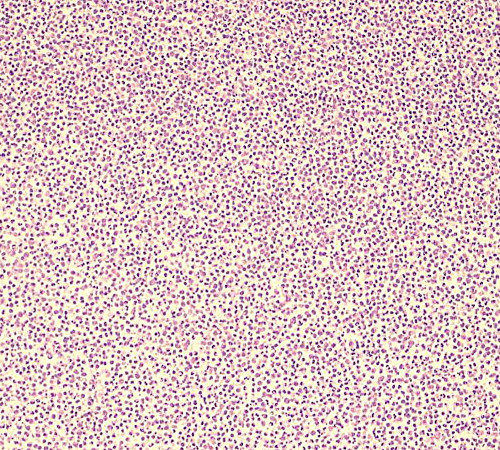
(High-magnification image of severe endophthalmitis. Credit: Moran Eye Center Pathology Lab)