
AI-Powered App Could Replace Clinic Equipment with At-Home Test
 A US university spin-out is developing a smartphone-based visual field analyser that could transform how ophthalmologists monitor glaucoma patients between clinical visits.
Researchers at the University of South Florida (USF) are trialling an investigational AI-driven application that enables glaucoma patients to conduct visual field testing from home at a fraction of the cost of traditional clinic-based equipment.
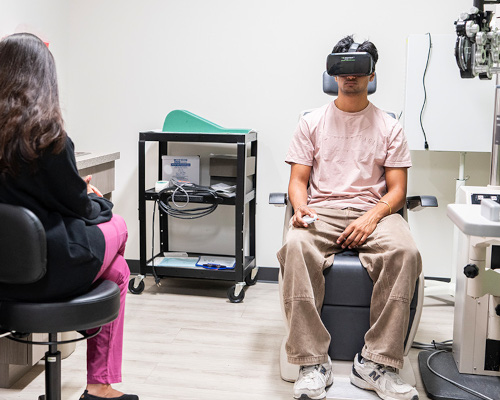
The technology, called GlaucTest, pairs a standard smartphone with a low-cost virtual reality headset and a handheld clicker to replicate the function of the Humphrey Visual Field Analyzer, the current gold standard for perimetry in clinical practice. While a Humphrey unit carries a price tag of around US$30,000, the GlaucTest setup is estimated to cost approximately US$42.
The five-minute per-eye test generates results that are securely uploaded to the treating ophthalmologist for review, enabling remote monitoring of patients with this chronic, progressive condition.
The project is led by Dr Ramesh S. Ayyala, James P. and Heather Gills Endowed Chair and head of the Department of Ophthalmology at USF Health Morsani College of Medicine. Ayyala says the impetus for the technology was straightforward: patients simply aren't coming in often enough.
"Patients have to come to us for regular testing, using expensive equipment in specialised clinics, and many simply don't come often enough," he said. "We want to use technology to move to a place where physicians monitor patients remotely while they test themselves at home. The goal is to give the power to the patient — the best way to manage chronic diseases like glaucoma."
A spin-out with commercial ambitions
To advance the technology toward market, Ayyala has founded GlaucHome, a startup established through the USF Ventures Launch Program, an initiative run by USF's Technology Transfer Office. The patent-pending technology, developed at USF, is licensed to GlaucHome for commercialisation.
Diana Shapiro, executive in residence for USF Ventures, said the programme takes a selective approach to commercialisation. "Every technology has to clear our proprietary IP Commercial Assessment before it advances — we weigh the science, the strength of the IP, the regulatory path and real market need. GlaucTest cleared that bar."
GlaucTest remains in the research phase and is subject to ongoing regulatory review before any commercial deployment.
Implications for eyecare practices
For eyecare professionals, the technology raises important questions about the future of remote perimetry and patient-led monitoring. Glaucoma affects more than 300,000 Australians, with a significant proportion going undiagnosed or inadequately monitored due to access barriers and the burden of regular clinic attendance.
A validated at-home visual field test would not only reduce pressure on clinical workflows but could also flag earlier changes in patients who would otherwise present only once or twice annually. More frequent data points, potentially monthly, could allow practitioners to identify progression earlier and adjust management accordingly.
Ayyala's patient John Storms, who has lived with glaucoma for nearly 30 years following surgical intervention, put it simply: "With traditional testing once a year, a lot can happen in that time. It would give me peace of mind and a little more control over something I really have no control over."
GlaucTest is not yet commercially available. Practitioners wanting to follow the technology's development can visit glauchome.com.
(photo credit: Frederick Coleman, USF Health)