


World-First Genetic Test Could Reveal Which Patients Will Lose Their Sight to Glaucoma
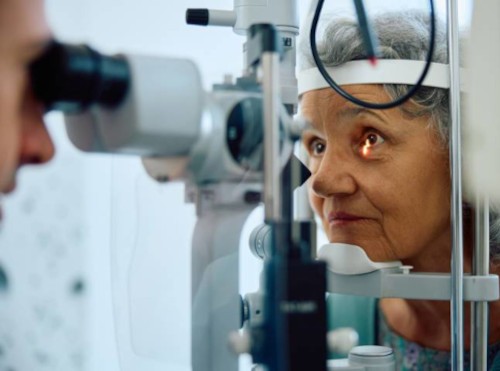 Optometrists are set to play a frontline clinical role in a new national initiative that will use genetic risk testing to work out which relatives of glaucoma patients need closer monitoring and which don't.
The Flinders University-led program, backed by a $939,500 National Health and Medical Research Council (NHMRC) Partnership Project grant, will roll out a world-first targeted screening pathway combining accredited polygenic risk score (PRS) testing with comprehensive eye examinations across metropolitan, regional and interstate sites.
For practitioners, the most immediate point of interest is structural: delivery of the clinical assessments will sit with the Southern Adelaide Local Health Network (SALHN) and its network of ophthalmologists, working alongside community optometrist partners. The initiative will also produce new national clinical guidelines for glaucoma PRS testing and dedicated education resources for eyecare professionals, alongside plain-language materials for patients and families.
Closing a known screening gap
Glaucoma remains Australia's leading cause of irreversible blindness, affecting close to 400,000 people, around half of whom don't know they have it. Family history is one of the strongest known risk factors: up to one in four Australians with an affected relative will go on to develop the disease themselves, putting them at up to nine times the risk of vision loss compared with the general population.
The problem for clinicians has been precision. Current approaches can identify that a patient is "at family risk," but cannot reliably stratify which relatives within that family are most likely to progress to vision-threatening disease meaning many patients are recalled for monitoring more often than necessary, while others may be under-monitored.
Chief investigator Professor Jamie Craig, Co-Director of the Flinders Health and Medical Research Institute Eye and Vision Flagship, said the program was designed to close that gap directly.
"Glaucoma is highly hereditary, yet we currently lack precise tools to identify which relatives are genuinely at risk," Professor Craig said.
The program will enrol a large cohort of Australians with a family history of glaucoma, generating personalised genetic risk results to sit alongside detailed clinical eye assessments. High-risk participants will be supported with tailored reminders and structured follow-up pathways, a recall mechanism aimed squarely at reducing drop-off from ongoing care, which researchers point to as a key contributor to preventable vision loss.
The delivery partners
Three organisations join Flinders in delivering the program:
- Seonix Bio: Australia's first provider of clinically accredited glaucoma PRS testing, will generate the accredited genetic risk reports underpinning clinical screening decisions, using its SightScore test.
- SALHN and its optometrist and ophthalmologist network: will deliver the clinical eye assessments across metro, regional and interstate locations.
- Glaucoma Australia: will lead consumer engagement, resource distribution and communication with affected families.
Dr Sinead O'Connell, Vice President of Operations at Seonix Bio, said the partnership was about moving accredited PRS testing from early adoption into mainstream clinical workflow.
"This project is an important opportunity to embed this technology into routine practice," Dr O'Connell said, noting SightScore is already supporting clinicians to identify patients at significantly elevated genetic risk.
Why it matters for the chair-side conversation
Beyond the screening trial itself, the planned national clinical guidelines are likely to be the part of this initiative with the broadest reach into day-to-day practice. Genetic risk stratification for glaucoma has moved relatively quickly from research setting to commercially available accredited test, but formal clinical guidance, and structured CPD resources, on how and when to use PRS results in routine screening and referral decisions has lagged behind. This program is explicitly designed to produce both.
Professor Craig framed the broader ambition as preventive rather than purely diagnostic.
"This is about giving Australians the knowledge, tools and clinical pathways to protect their sight before damage occurs," he said.
Funding context
The grant GNT2053517, "New targeted glaucoma screening program for high genetic risk individuals", was one of nine new NHMRC Partnership Project grants announced this week, totalling $13.7 million in NHMRC funding plus an additional $17.4 million committed by partner organisations.