


Pupillometry Test Could Give ICUs Early Clue on Brain-Injury Recovery
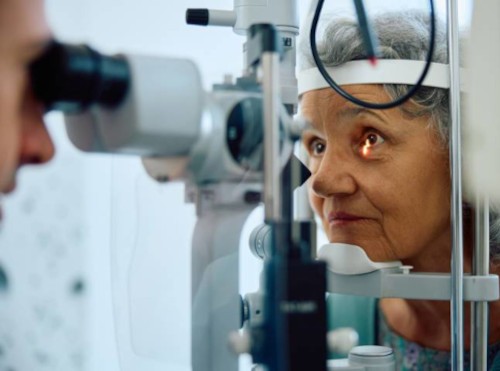 Eyecare professionals working alongside critical care teams may soon have a new reason to pay attention to a familiar piece of kit: the handheld pupillometer. New research presented at the European Academy of Neurology (EAN) Congress 2026 suggests that a previously overlooked feature of the pupillary light response could help predict whether patients with severe brain injuries will regain consciousness using a test that takes just 13 seconds per eye.
What the study found
Researchers from Copenhagen University Hospital Rigshospitalet and the Danish Technical University examined 250 patients with impaired consciousness following traumatic and non-traumatic brain injury, alongside 30 age- and sex-matched healthy controls. Patients underwent daily automated pupillometry and neurological assessments for up to 20 days in intensive care.
The team focused on a phase of the pupillary response occurring after the eye's initial reaction to light dubbed the "late light-off response" (LOR). They found that late LOR latency independently predicted improvement in consciousness seven days later, even after adjusting for baseline neurological status, time since injury, sedation and injury type.
Notably, this predictive signal was unrelated to a patient's responsiveness on the day of testing meaning it may pick up recovery potential that standard bedside assessments miss entirely.
By contrast, the metrics currently relied on in ICUs the Neurological Pupil Index (NPi) and pupillary light reflex (PLR) latency showed no such predictive value for later gains in consciousness.
Why it matters for practice
Automated pupillometry is already standard equipment in many intensive care units, but current protocols capture only the pupil's immediate reaction to light, offering limited insight into a patient's longer-term trajectory. Lead author Dr Poul Laigaard said existing tests reveal how the brain is responding "in the moment," while the late light-off response may instead offer clues to the brain's capacity for recovery.
The association was strongest in patients not receiving sedative medication and in those with anoxic–ischaemic brain injury where the brain has been deprived of oxygen and blood flow. The researchers stressed these subgroup results are exploratory and need confirmation in larger trials.
A low-barrier addition to existing tools
Because the underlying hardware is already in widespread ICU use, the researchers suggest the approach could be adopted with minimal disruption if validated further. Dr Laigaard noted the light-off response is captured with the same handheld pupillometer used for existing measurements, requiring no new equipment just a longer look at data already being generated.
Senior author Professor Daniel Kondziella said the finding "deserves further investigation," calling for larger, multicentre studies to establish whether the measure could be built into routine bedside monitoring and prognosis.
The takeaway
For now, the finding remains a conference presentation rather than a peer-reviewed, validated clinical tool. But for practices and hospital-based eyecare professionals working with automated pupillometry, it's a reminder that the technology's diagnostic ceiling may be higher than current protocols suggest and a signal to watch for follow-up multicentre studies before any change to clinical workflows.