

AI Helps 'Bionic Eye' Better Talk to the Brain, Study Finds
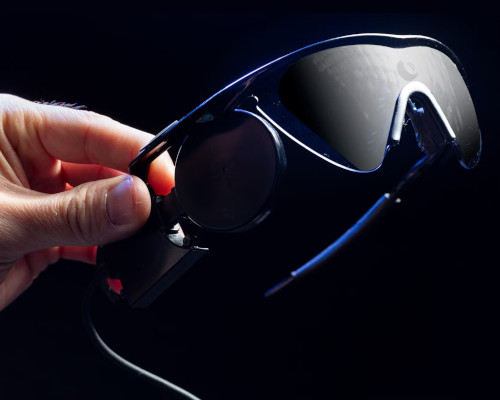 Researchers in the US and Europe have used deep learning to make cortical visual prostheses, devices designed to restore sight by stimulating the brain directly, more precise and better tailored to individual patients, in a proof-of-concept trial that could shape the next generation of bionic eye technology.
The study, led by UC Santa Barbara associate professor of computer science Michael Beyeler and colleagues, used a deep-learning model to design patterns of electrical stimulation for electrodes temporarily implanted in the visual cortex of a blind participant. Unlike retinal implants, which target the light-sensitive layer at the back of the eye, cortical prostheses bypass the eyes and optic nerve altogether, delivering stimulation directly to the visual cortex, the brain region responsible for processing sight.
That approach could eventually help patients whose visual pathways are damaged but whose visual cortex still responds to stimulation, including people who have lost their sight to strokes, neurodegenerative disease or brain injury.
The trial
The work, published in the journal Neuron, is part of a broader feasibility trial underway in Spain. The project was led by co-first authors Pehuén Moure of ETH Zurich, Jacob Granley of UCSB, and Fabrizio Grani of Miguel Hernández University, with senior supervision from Beyeler, Shih-Chii Liu at ETH Zurich, and Eduardo Fernández at MHU.
In 2024, members of Beyeler's Bionic Vision Lab travelled to Hospital IMED Elche in Spain to test the approach on a real patient, a 27-year-old man who had lost his vision following a traumatic brain injury and had received a 96-channel electrode array implanted in his visual cortex for six months. Stimulating the implant produced phosphenes, flashes, spots or shapes of light sometimes compared to stars or fireworks.
Reading the brain, not just the electrodes
Rather than relying purely on which electrodes were switched on, the team trained a deep neural network on data from the implant itself, which could both stimulate the brain and record how neurons responded to that stimulation. The model was trained to predict patterns of brain activity produced by different stimulation settings, and also factored in the brain's resting activity immediately before each test.
The payoff was twofold. AI-designed stimulation patterns reproduced targeted brain activity more accurately and needed less electrical current than other approaches. And critically, the recorded brain activity predicted what the participant actually perceived better than the stimulation settings alone did, meaning that measuring the brain's response was a better guide to the patient's visual experience than simply knowing which electrodes had fired.
The participant reported whether he perceived a phosphene and, in some tests, described its shape, size, brightness and colour.
Why pixels don't map to perception
The findings challenge a common assumption in prosthetic design. Beyeler noted that engineers naturally want to treat phosphenes like pixels, stimulate more electrodes and expect a more complete image, but the brain doesn't work that way, since electrodes interact and neural responses fluctuate, meaning what's put into the brain isn't necessarily what the person perceives.
That variability is also why the model incorporated resting-state brain activity, allowing stimulation to adapt to the brain's current state, a potentially important step toward prostheses that stay reliable as neural responses shift from day to day. As Beyeler put it, a useful visual prosthesis can't rely on a fixed recipe: it has to learn how an individual brain responds and adapt the stimulation accordingly, so the device adapts to the person rather than the other way around.
Building on years of NIH-backed research
The work builds on computational research supported by Beyeler's 2022 NIH Director's New Innovator Award, a five-year, US$2 million grant aimed at making visual prostheses more predictable and effective.
Beyeler said the leap from lab modelling to real-world testing was significant. He described the difference between building a model in the abstract and seeing it shape an experiment with a real person as "something else entirely," adding that the ability to move from theory toward something that might one day help people is central to his lab's work.
For patients who had sight earlier in life before losing it to injury or inherited disease, Beyeler said the desire to regain some vision can be especially strong.
While still an early-stage, single-participant proof of concept, the study adds to a growing body of evidence that AI-driven, adaptive stimulation, rather than fixed, one-size-fits-all electrode patterns, may be key to making cortical visual prostheses clinically viable. For eyecare professionals tracking the neuroprosthetics space, it's a signal that the next wave of bionic eye development will lean as heavily on machine learning as on electrode hardware.
(image credit: Matt Perko)