


Graphene Breakthrough Brings Electronic "Autofocus" Lenses a Step Closer
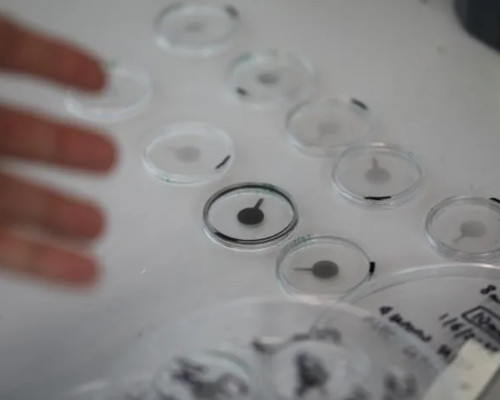 Researchers in London have engineered a see-through, electrically driven lens that mimics the way the human eye changes focus, a development that could eventually filter through to compact diagnostic and imaging tools used in eyecare.
A team at Queen Mary University of London (QMUL), led by Professor James Busfield, has published new findings in Advanced Functional Materials describing a soft, electrically tunable lens built around an ultra-thin, transparent electrode made from reduced graphene oxide (rGO). The design does away with the bulky actuation rings and opaque electrodes that have long limited how small and lightweight adaptive lenses can be made.
Why it matters for the sector
Most electrically driven soft lenses developed to date rely on flexible electrodes positioned around the outside of the lens, because the conductive materials used are not transparent enough to sit over the optical path itself. That constraint has kept devices bulkier than they need to be, a real barrier for anyone hoping to build focus-tunable optics into handheld or wearable diagnostic instruments.
By formulating a sprayable rGO ink that can be coated directly onto a dielectric elastomer membrane, the QMUL team has produced electrodes that are both electrically conductive and semi-transparent. Placed directly beneath a soft plano-convex lens made of polydimethylsiloxane (PDMS), the coated membrane acts as an actuator: apply a voltage, and the resulting electrostatic (Maxwell) stress stretches the membrane radially, subtly reshaping the lens and shifting its focal point, much as the ciliary muscles reshape the crystalline lens of the eye.
The engineering trade-off
The researchers systematically tested rGO coatings of varying density, from 0.10 to 0.17 micrograms per square millimetre, corresponding to layers roughly 50–80 nanometres thick. Predictably, thicker coatings improved conductivity, with sheet resistance dropping from around 600 kΩ per square to about 15 kΩ per square, but at the cost of transparency, which fell from around 42% to 17% at 550 nanometres, the wavelength closest to peak human visual sensitivity.
After modelling the mechanics of the coupled lens-actuator system, the team settled on a middle-ground coating density of 0.12 µg/mm², which delivered roughly 32% transmittance alongside sufficient actuation strain (about 10%) to meaningfully shift focus.
Performance in prototype form
The finished device, a 12.5-millimetre-wide lens paired with the rGO-based actuator, achieved a compact, self-contained form factor rarely seen in electrostatically tuned optics. Driven across an electric field range of 0 to 50 volts per micrometre, the prototype shifted its focal length from roughly 30 millimetres to 36 millimetres, successfully bringing test targets at different distances into focus during bench trials using a USB camera and a standard optical resolution target.
Where this could lead
The authors are careful to frame the work as a research milestone rather than a market-ready product, and note in the paper that surface roughness in the graphene coating, caused by flake agglomeration, currently limits how far transparency can be pushed without sacrificing performance. Improving the dispersion of the rGO ink is flagged as the next step, with potential gains in both optical clarity and actuation range.
Still, the implications for applications adjacent to eyecare are notable. Giacomo Sasso, the study's first author, said the technology could eventually feed into "autofocus cameras, wearable displays, virtual and augmented reality headsets, miniature medical imaging devices and scientific instruments where conventional mechanical focusing systems add weight, complexity or cost."
Co-author Alec Lamoreux pointed to the broader shift the work represents in device design philosophy, noting that electrically active polymers "behave more like artificial muscles, changing shape smoothly and silently in response to electrical signals," an approach that, paired with graphene's conductive properties, offers an alternative to motor-driven focusing mechanisms.
For practitioners watching the diagnostic imaging and wearable optics space, the research is an early but tangible sign that soft, muscle-like actuation materials may eventually find their way into smaller, quieter, and more energy-efficient focusing systems, without the gears, motors or bulky housings that current adjustable-optic devices depend on.