

SKUGGA Unveils 'Physical AI' Eyewear to Detect Progressive Lens Compensation; Eyes Australian Commercial Partners
New sensor-enabled frames offer optical retailers real-world lens data after dispensing, with the Swedish tech firm seeking local distribution and pilot networks.
SKUGGA Technology recently introduced a new category of privacy-first, sensor-enabled intelligent eyewear designed to track how lenses, workplace behaviours, and physical environments interact in real-world conditions.
For independent optometry practices and optical dispensers, the technology bridges a critical gap in patient care. Traditional lenses are fitted during a single, static appointment. Once a patient leaves the practice, practitioners have zero visibility into how those lenses perform across changing digital tasks, working distances, and ambient lighting.
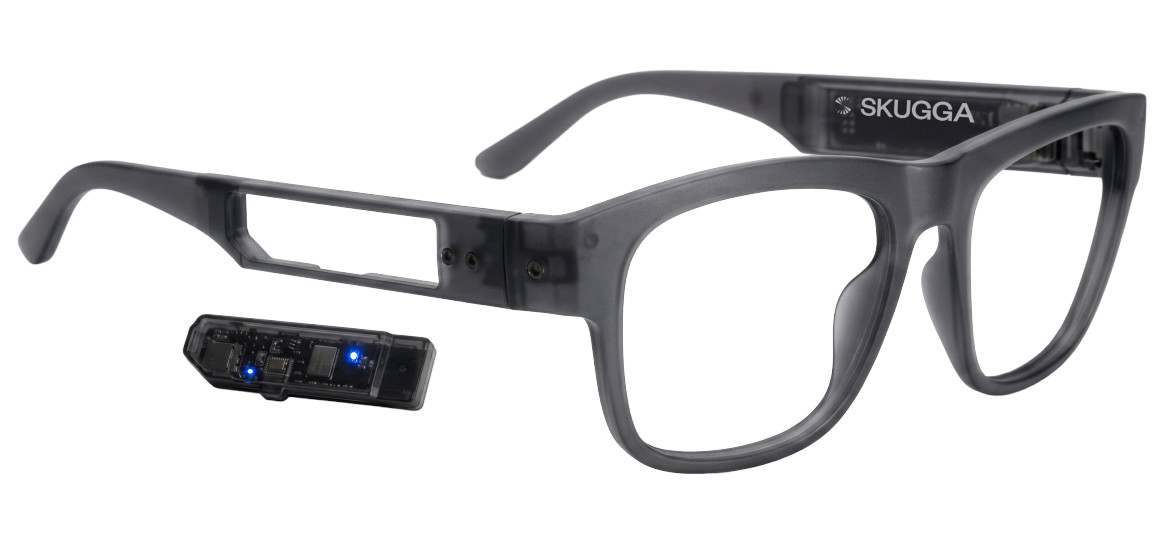
Instead of waiting for patients to experience physical discomfort or return to the clinic with non-tolerance issues, SKUGGA’s lightweight sensor module continuously monitors subtle physical adaptations.
Five Core Real-World Insights
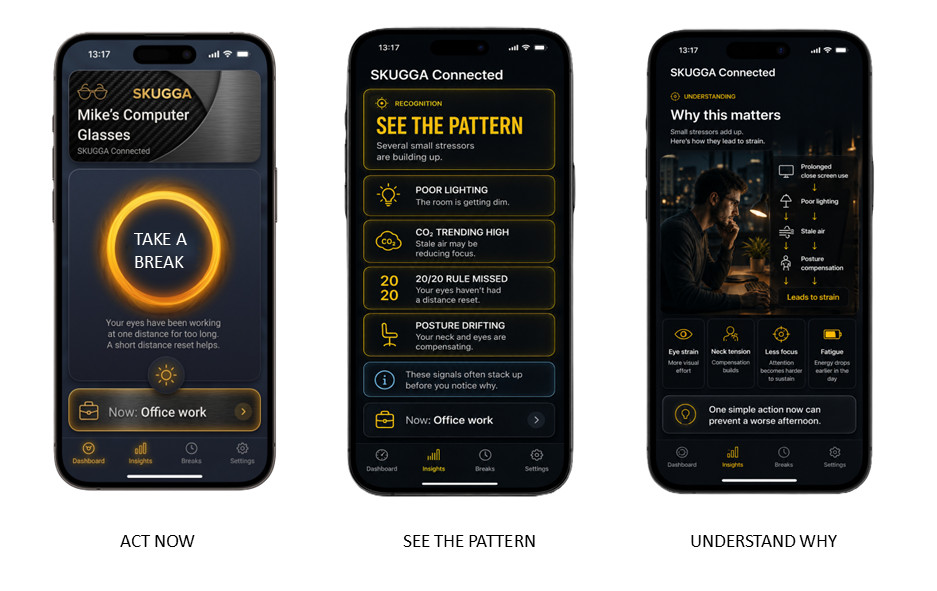
Operating entirely without cameras, video, or microphones to ensure total patient privacy, the platform uses motion, orientation, light, and environmental signals to identify five common sources of visual load:
- Progressive Lens Compensation: Recognises when wearers repeatedly tilt or strain their heads to find a clear viewing zone through progressive lenses, indicating that computer lenses or screen setups need a clinical review.
- Unbroken Visual Work: Tracks prolonged, low-variation near-work patterns to nudge the wearer to look away and interrupt fatigue building.
- Screen-to-Room Balance: Identifies sustained digital work in poor surrounding light conditions.
- Declining Air Quality: Detects worsening environmental conditions in office spaces that exacerbate dry eye or personal fatigue.
- Static Working Behaviors: Flags prolonged lack of physical movement during workplace tasks.
Unlocking New Post-Sale Opportunities for Optical Retailers
Rather than behaving like a standard consumer wellness tracker, SKUGGA creates a new stream of real-world evidence for eyecare professionals to support informed patient follow-ups, targeted workplace recommendations, and higher occupational lens conversions.
"For more than a century, eyewear has corrected vision without knowing how the wearer actually uses it," said Mikael Eriksson, co-founder and CEO of SKUGGA Technology. "The next step is allowing eyewear to understand when the wearer is compensating, what habits keep recurring, and exactly when the optical solution should be proactively reviewed by their practitioner."
Australian Distribution and Pilot Opportunities
While initial workplace pilots are slated for the US, UK, and European markets, SKUGGA is actively looking toward the Australasian region for its next commercial phase.
"Australia is definitely a market we are interested in, both for optical retail and for future applications around environmental exposure, UV, and all-day eyewear," confirmed Eriksson. "Our current commercial focus is still on workplace and occupational use, so we are keeping the first pilots quite narrow."
The company does not currently have an active Australian distributor or localised retail partner, and the executive team welcomes recommendations or introductions to local optical groups, distributors, and potential pilot partners ahead of their planned expansion.
Australian optical buying groups, independent networks, and commercial distributors interested in exploring pilot opportunities or distribution rights can contact the SKUGGA executive team directly via their website at: https://skugga.com .