


Science Corp Launches PRIMA in Europe, First BCI Device Approved to Restore Reading Vision in Geographic Atrophy
 The retinal brain-computer interface flagged to EyeSmart readers in March has now secured its CE mark and begun commercial rollout across 30 European countries, with Germany first in line for implants.
Science Corp has this week announced the European commercial launch of PRIMA, its subretinal brain-computer interface (BCI) device, after receiving a CE mark under the EU's Medical Device Regulation from notified body DEKRA. The approval authorises commercial availability of the implant across 30 European countries, and the company says the first commercial implant procedure is expected imminently in Germany.
It's a significant milestone for a company EyeSmart readers will recognise from our March coverage of Science Corp's US$230 million Series C raise, when the San Francisco neural engineering company was still awaiting regulatory sign-off in Europe and flagging Australian trial expansion into Stargardt disease and retinitis pigmentosa. At the time, Science described a European launch as being in the near term; that has now materialised.
What PRIMA does
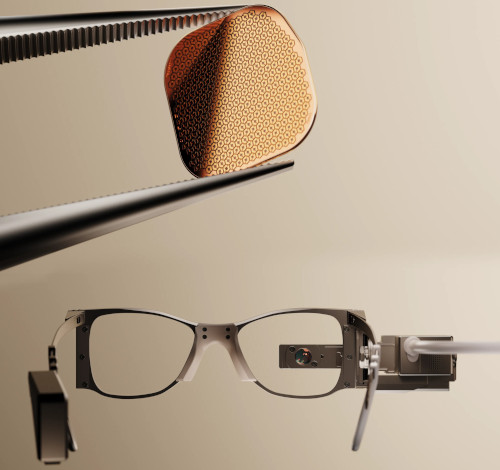
PRIMA is designed for people with geographic atrophy (GA) secondary to age-related macular degeneration (AMD), a progressive condition that destroys photoreceptors at the centre of the retina and, until now, has had no approved treatment to restore lost function. The system pairs a 2mm x 2mm photovoltaic implant, placed under the atrophic macula, with dedicated glasses that project near-infrared light onto the chip, generating electrical stimulation signals interpreted by the brain as form vision. A built-in zoom feature allows patients to magnify text.
Crucially, Science Corp is marketing PRIMA as the first BCI device to receive CE marking specifically for restoring form vision, meaning the ability to read letters, numbers and words, rather than simple light perception.
The clinical data
The regulatory approval follows publication of multi-centre trial results in the New England Journal of Medicine, covering 38 patients across 17 sites in five countries. Science Corp reports:
- A mean improvement of 25.5 letters, more than five lines, on the ETDRS chart
- 84 per cent of patients regained the ability to read letters, numbers and words
- 80 per cent achieved a clinically significant prosthetic visual acuity gain of at least logMAR 0.2 (10 letters) at 12 months (p<0.001)
- No decline in patients' existing natural vision following implantation
Science Corp says AMD-related GA affects more than five million people globally, and frames PRIMA as filling a gap for a patient group eyecare professionals see routinely but have had little to offer beyond low vision support.
Reimbursement and rollout
Country-specific reimbursement applications and clinical site activations are now underway across Europe, with Science Corp stating its intention to make the device accessible and reimbursable "as quickly as possible." The company is separately working with the FDA on a US pathway, where PRIMA already holds Breakthrough Device and Humanitarian Use Device designations. Note that PRIMA remains unavailable commercially outside the EU/EEA, including in Australia.
What it means locally
The European launch doesn't change the regulatory picture for Australian patients in the near term, PRIMA is not available here, and the earlier-flagged Sydney Eye Hospital trials targeting Stargardt disease and retinitis pigmentosa, led by Dr Matthew Simunovic, remain the more directly relevant pathway for local practitioners to watch. But a live commercial launch in a major device market is a meaningful proof point for the technology, and strengthens the case that Science Corp's ambition, to become the first profitable BCI company, is moving from trial data to real-world rollout. Practitioners with patients affected by GA or AMD may increasingly field questions as European coverage of the launch reaches the public.